
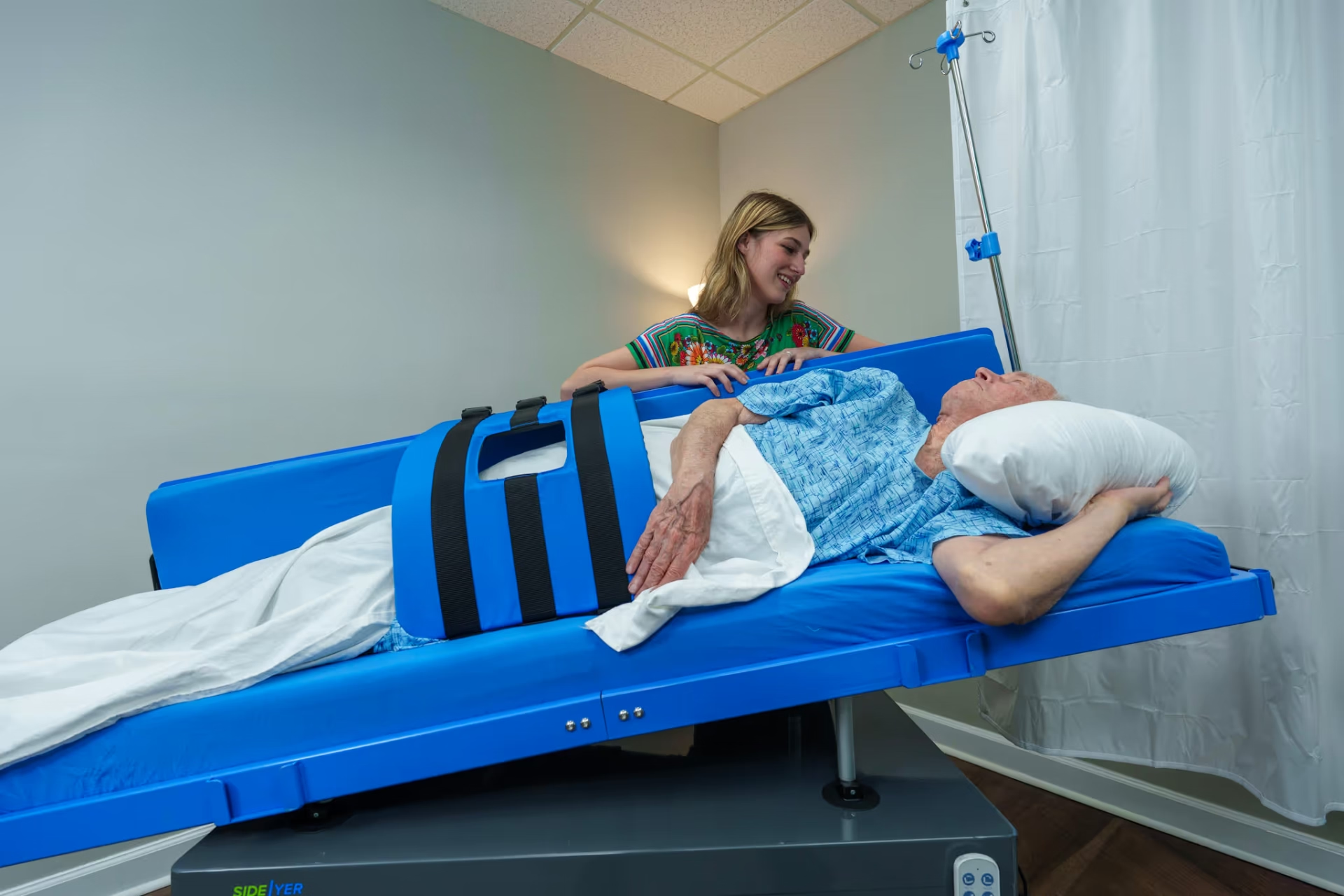
Wound Care Prevention Device for Nursing Homes and Skilled Nursing Facilities
Preventing pressure ulcers and reducing strain on nursing staff

Why SideLyer matters for nursing homes and skilled nursing facilities
Designed specifically for nursing homes, supporting safer workflows, reduced staff injuries, and better resident comfort
Motorized repositioning system that lets caregivers safely tilt, lift, and angle residents right, left, or head-to-toe—without strain or risk of injury
Delivers smooth, controlled movements and a full range of positioning at the push of a button
Replaces manual lifts, wedges, and repeated staff effort, reducing workload while improving consistency of care
Call Now
For Families and Loved Ones
Families want assurance that their loved ones receive consistent, gentle, and evidence-based care
Reduced risk of pressure ulcers and skin breakdown
Improved comfort and circulation through micro-repositioning
Dignified eye-level interactions with visitors and caregivers
Fewer injuries and safer handling for residents and staff
“Knowing that mom or dad can be safely lifted to eye level or turned comfortably in bed makes all the difference”


For Providers
SideLyer supports regular rehabilitation, recovery, and long-term comfort
Precisely angle the resident for therapy exercises or wound assessment
Lift the head or torso to eye level for better engagement and participation
Improve pulmonary and circulatory function with safe tilt adjustments
Support contracture management and postural therapy
SideLyer is more than a bed—it’s a clinical positioning tool that enhances therapy compliance and outcomes
Call Now
For Nursing Operators & Administrators
Improve Outcomes. Reduce Liability. Boost Satisfaction.
Reduce staff injuries due to frequent manual lifting
Resident comfort with personalized and repeatable positioning
Family confidence with visible technology-driven care
Integrate seamlessly into existing workflow and care protocols
Key features include
.avif)
.avif)
.avif)
.avif)
.avif)
.avif)
1
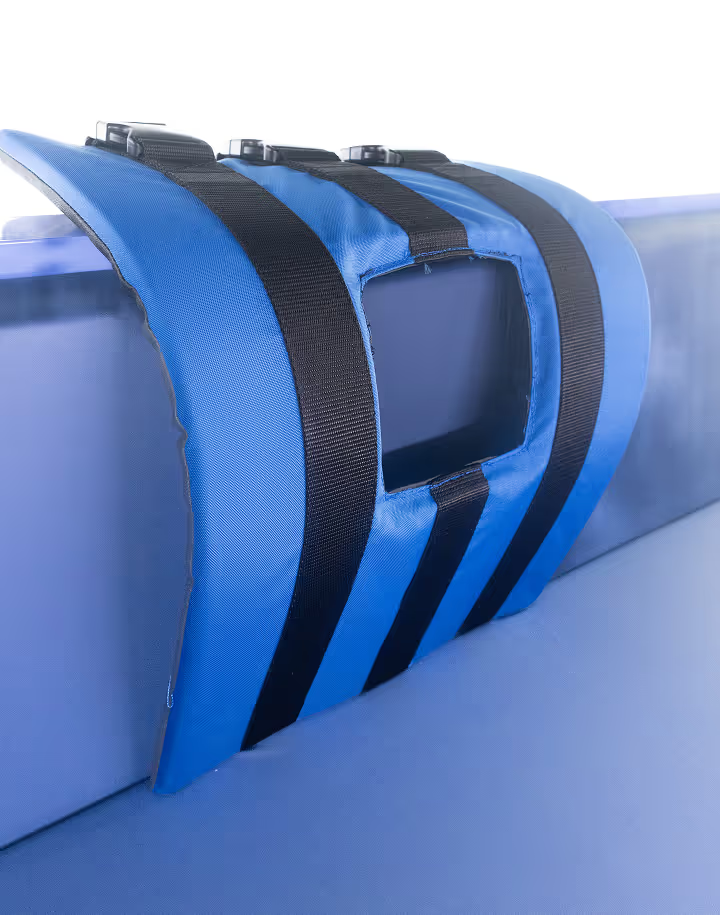
Detachable Safety Strap
Designed to accommodate G-tubes and other medical lines while keeping the patient secure during all positioning modes.
2
Electric Vertical Lift System
Provides smooth vertical elevation, angled positioning, and rotational adjustment — all controlled with a simple touch.
3
Detachable Tray
Securely mounts to the frame to support devices, activities, or treatment materials while remaining easy to remove when not in use.
4
Three-Layer Memory Foam Mattress
Features a supportive core, pressure-relief middle layer, gel memory foam top, and a high-performance, cleanable outer cover for maximum comfort and durability.
5
Rolling Caster Wheels
Allow effortless movement throughout the facility, even in tight or busy clinical environments.
6
Integrated Shock Absorbers
Enable smooth transport over thresholds and uneven flooring, protecting patient comfort and device stability.
7
Detachable IV Pole Attachment
Provides convenient management of fluids, medications, or feeding systems without additional equipment clutter.
8
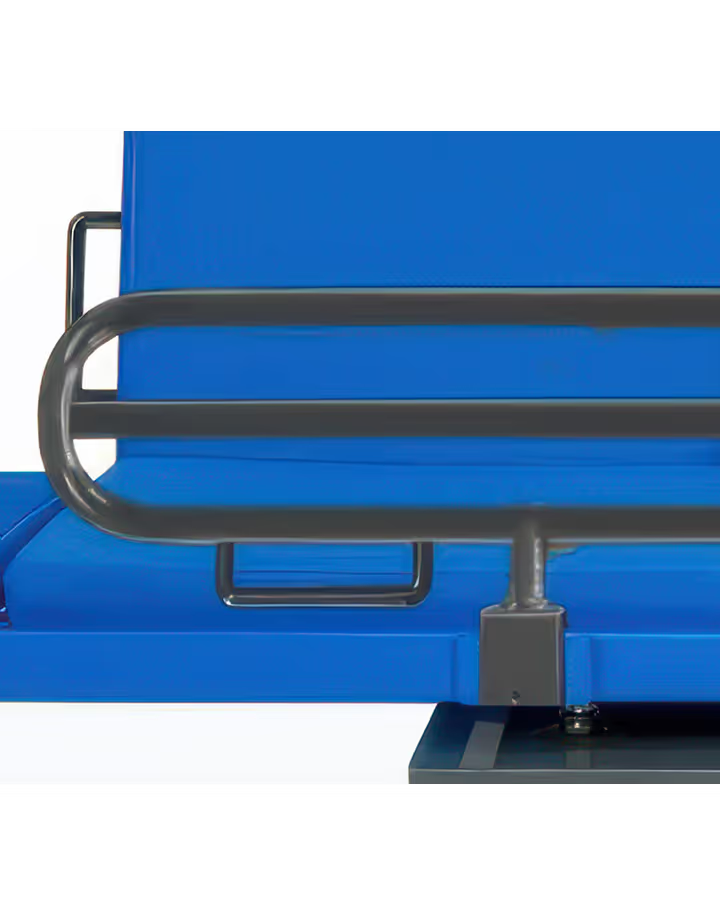
Optional Frame-Mounted Resting Rail
A secure rail that slots directly into the frame to provide added support and safety when the patient intends to rest or sleep in the SideLyer.
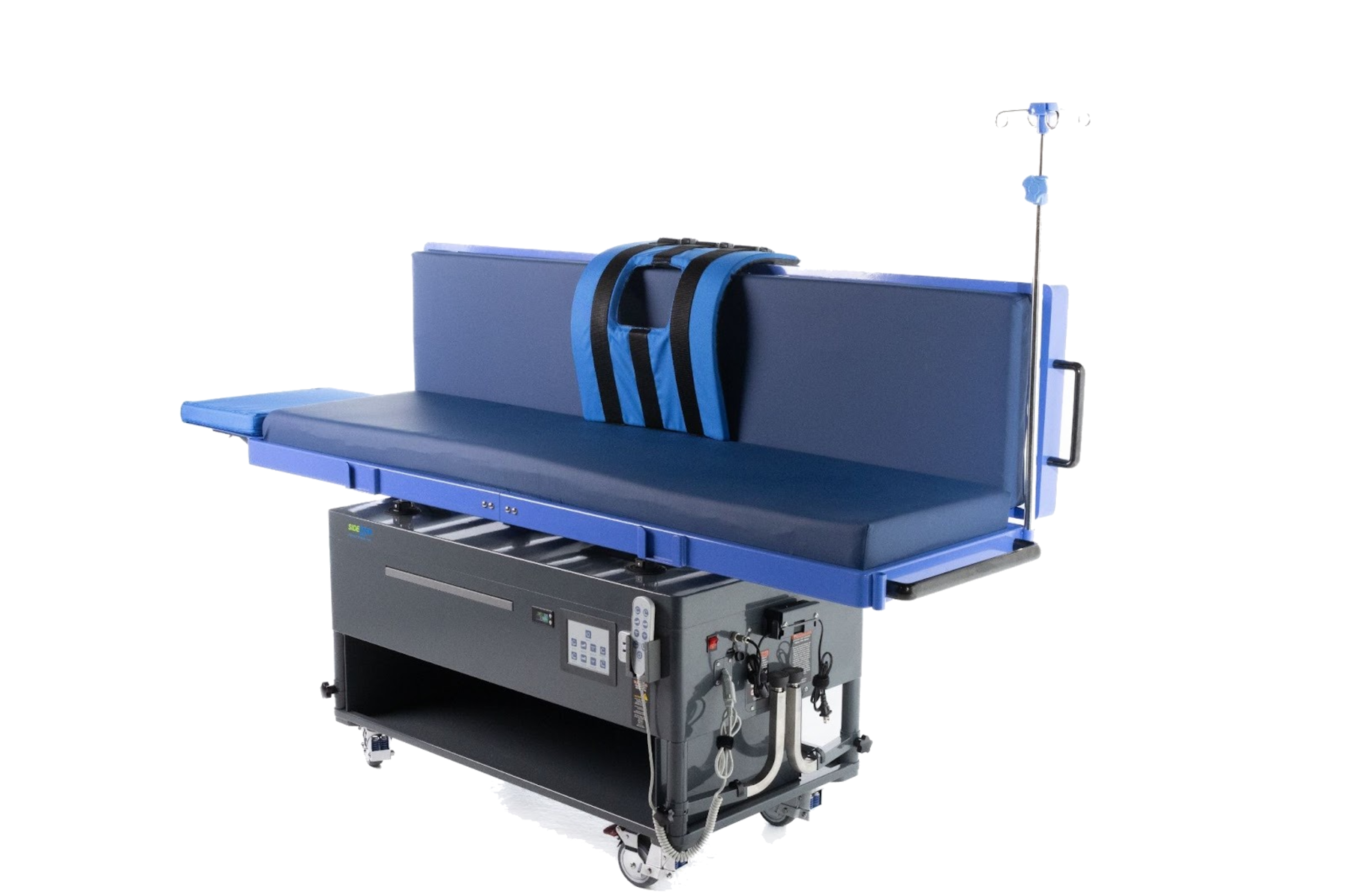
1
Base Configuration
Provides a neutral, stable lying position for general therapy, assessments, and safe patient positioning.
2
Lifted Position
Raises the entire platform vertically to support safer positioning at caregiver eye level, improving access for care activities and patient interaction.
3
Head-to-Toe Angling
Tilts the body along the longitudinal axis to elevate the chest for respiratory therapy or reverse-angle positioning for improved circulation and edema management.
4
Rotational Adjustment
Enables right or left lateral tilt for weight shifting, pressure relief, and balance or trunk-control training without manual repositioning.
Frequently Asked Questions

Schedule a Demo
Experience how SideLyer can transform care delivery in your nursing care facility. Contact our team for a virtual demonstration or on-site evaluation to see SideLyer in action.