

Wound Care Prevention for Veterans
Providing advanced dignified support for our
Veterans
Why SideLyer Matters for Veterans
Veterans and their loved ones want assurance that care is honorable, respectful, and effective. SideLyer delivers:
Comfort-first repositioning without strain or pain
Dignified elevation for eye-level conversation with family and caregivers
Better circulation and pressure management for wounds or long-term immobility
Support for respiratory ease and pain relief
“This system finally gave my father—an Army Veteran — comfort without the fear of being moved manually”
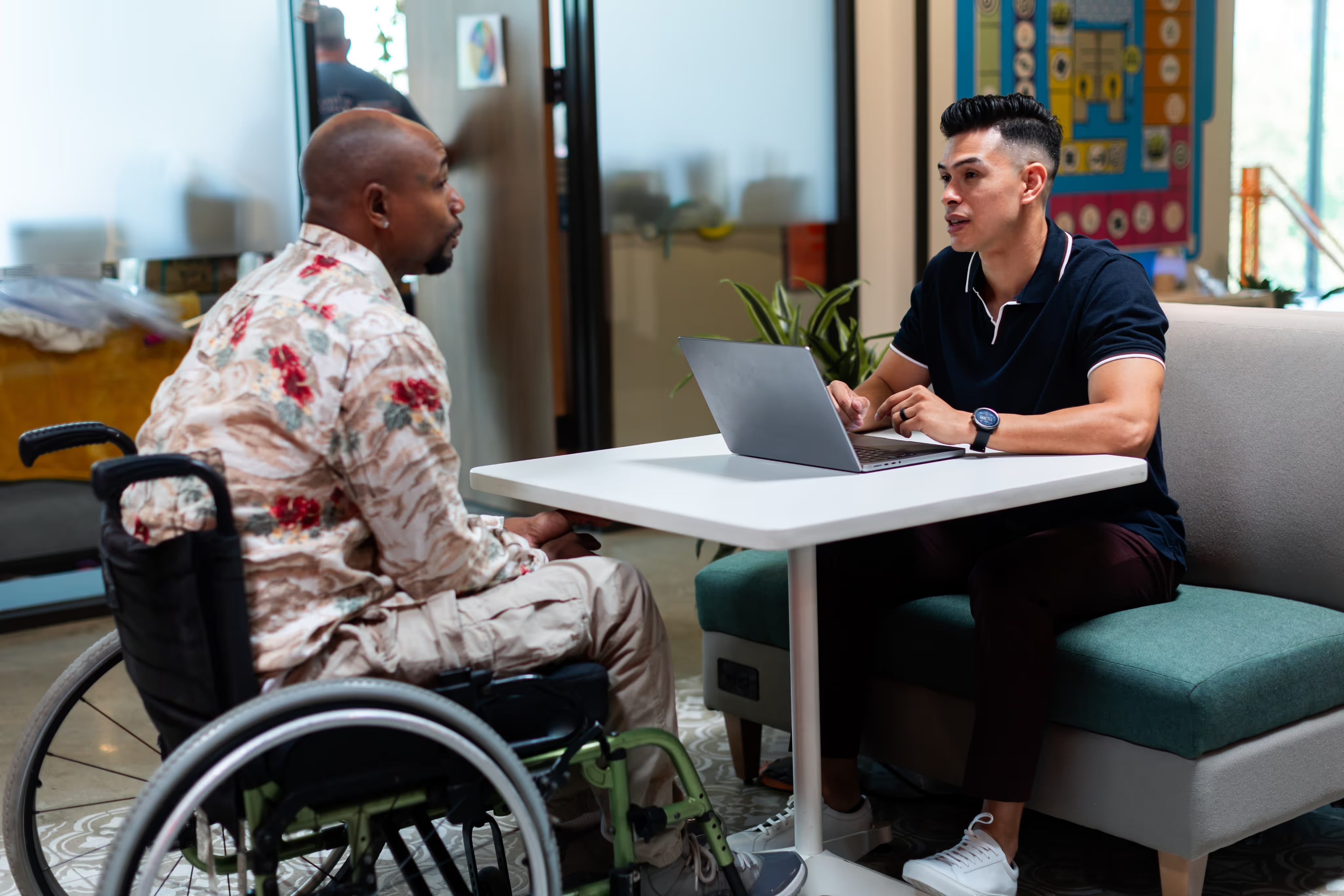
For VA Hospitals, Military Medical Centers & DoD Facilities
Reduce pressure ulcer risks while replacing manual turning with motorized repositioning and tilting
Reduce staff fatigue from heavy lifting
Veteran comfort — from being limited by physical strain to smooth, quiet, painless adjustments
With SideLyer, VA medical teams can deliver higher-quality care, reduce workers’ comp injuries, and showcase commitment to veteran well-being and dignity
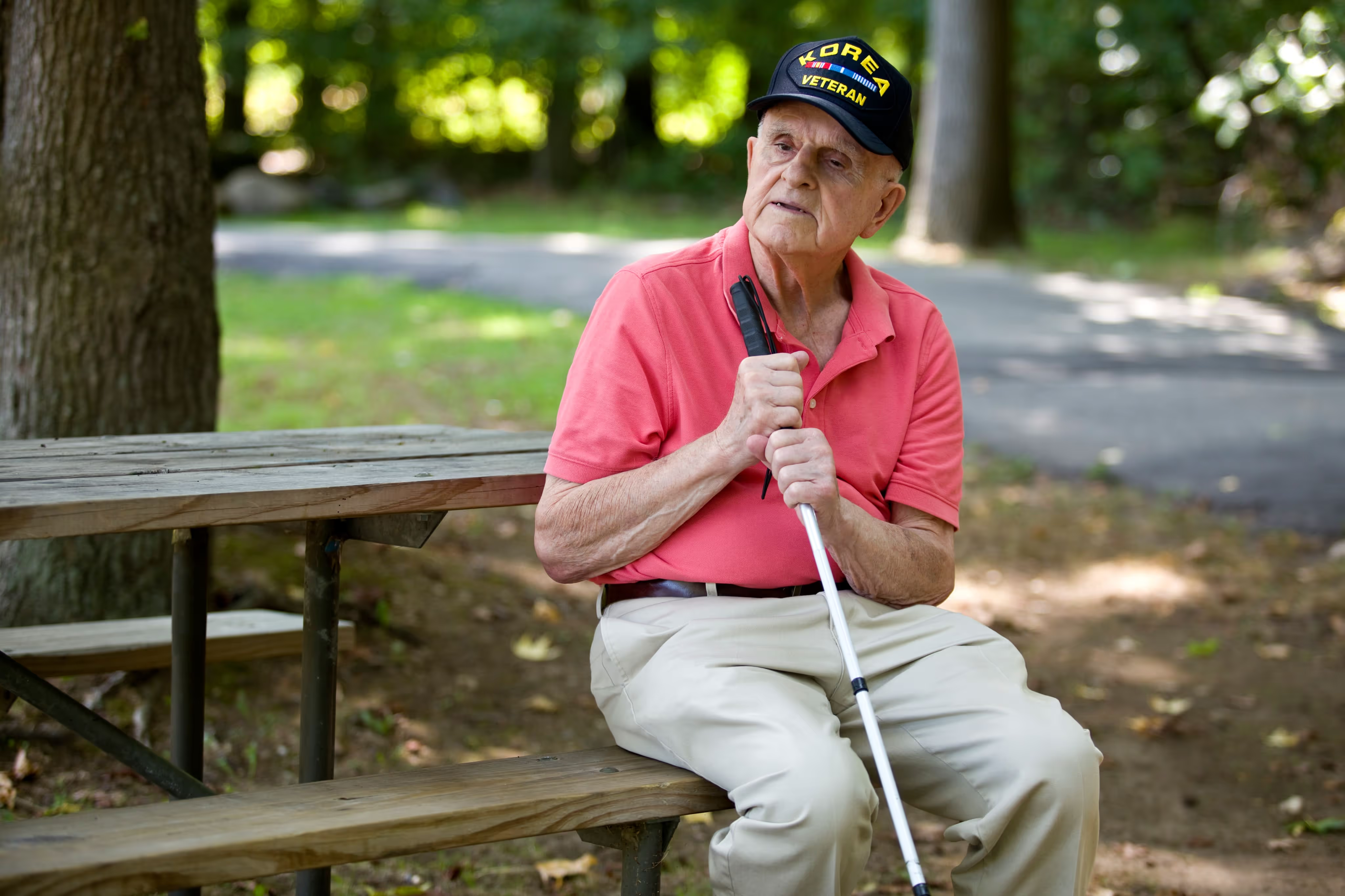
For Clinicians, Therapists & Rehabilitation Specialists
Veterans often require specialized rehabilitation due to :
Traumatic injuries
Neuromuscular disorders
Amputations
Long-term immobility
Controlled tilt — left, right, head-up, foot-up — for wound care
Improved positioning compliance for PT/OT treatment plans
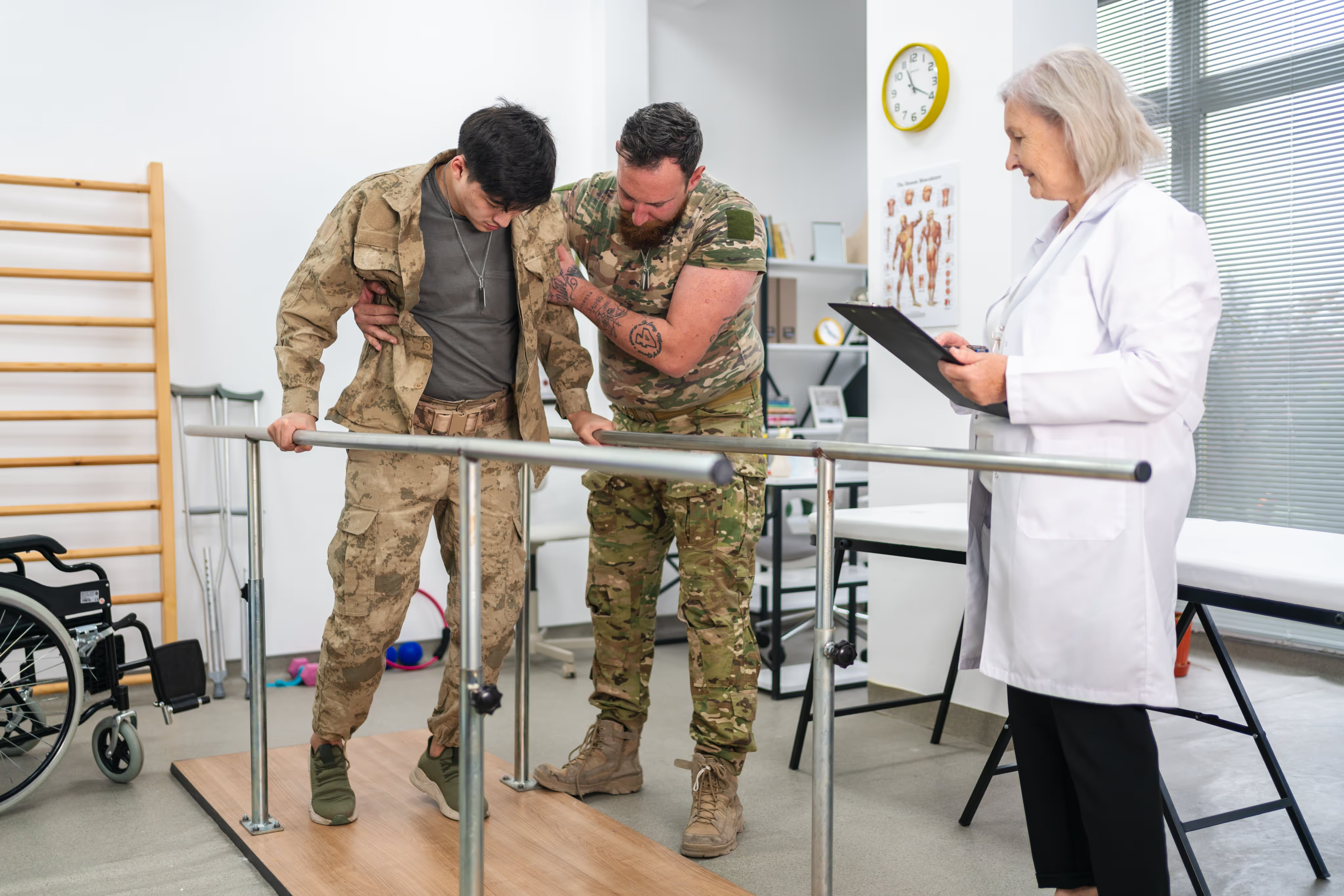
For Care Teams, Nursing Staff & VA Support Personnel
Reposition Veterans without physical strain
Perform care tasks (bathing, dressing, wound checks) more easily
Lower injury risk for nurses and support staff
Reduce stress and fatigue during long shifts
Stronger morale, greater job satisfaction, and more meaningful time spent interacting with Veterans

Key features include
.avif)
.avif)
.avif)
.avif)
.avif)
.avif)
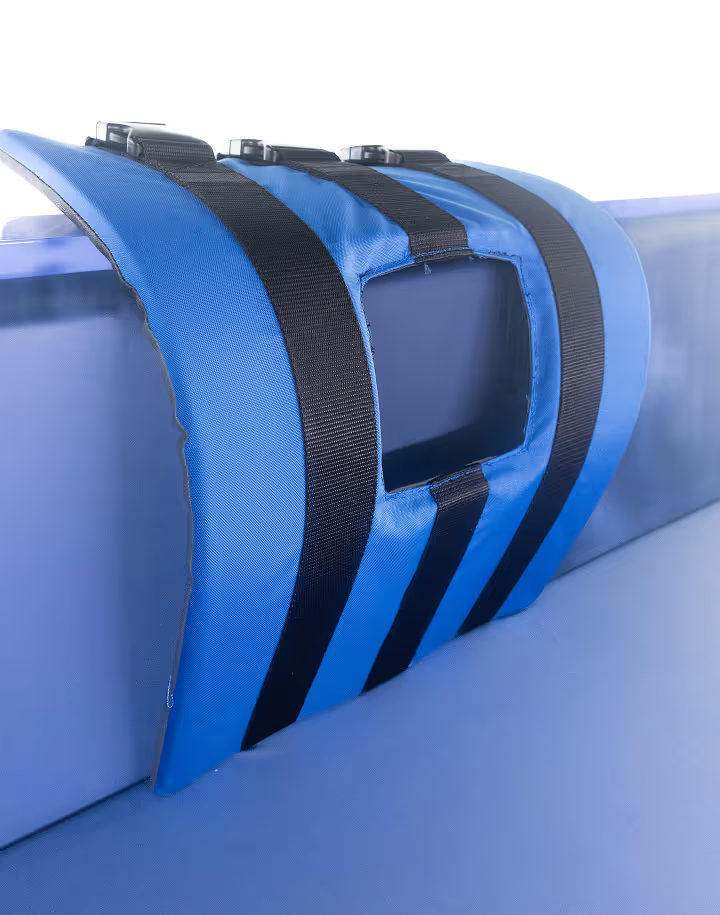
1
Detachable Safety Strap
Designed to accommodate G-tubes and other medical lines while keeping the patient secure during all positioning modes.
2
Electric Vertical Lift System
Provides smooth vertical elevation, angled positioning, and rotational adjustment — all controlled with a simple touch.
3
Detachable Therapy Tray
Securely mounts to the frame to support devices, activities, or treatment materials while remaining easy to remove when not in use.
4
Three-Layer Memory Foam Mattress
Features a supportive core, pressure-relief middle layer, gel memory foam top, and a high-performance, cleanable outer cover for maximum comfort and durability.
5
Rolling Caster Wheels
Allow effortless movement throughout the facility, even in tight or busy clinical environments.
6
Integrated Shock Absorbers
Enable smooth transport over thresholds and uneven flooring, protecting patient comfort and device stability.
7
Detachable IV Pole Attachment
Provides convenient management of fluids, medications, or feeding systems without additional equipment clutter.
8
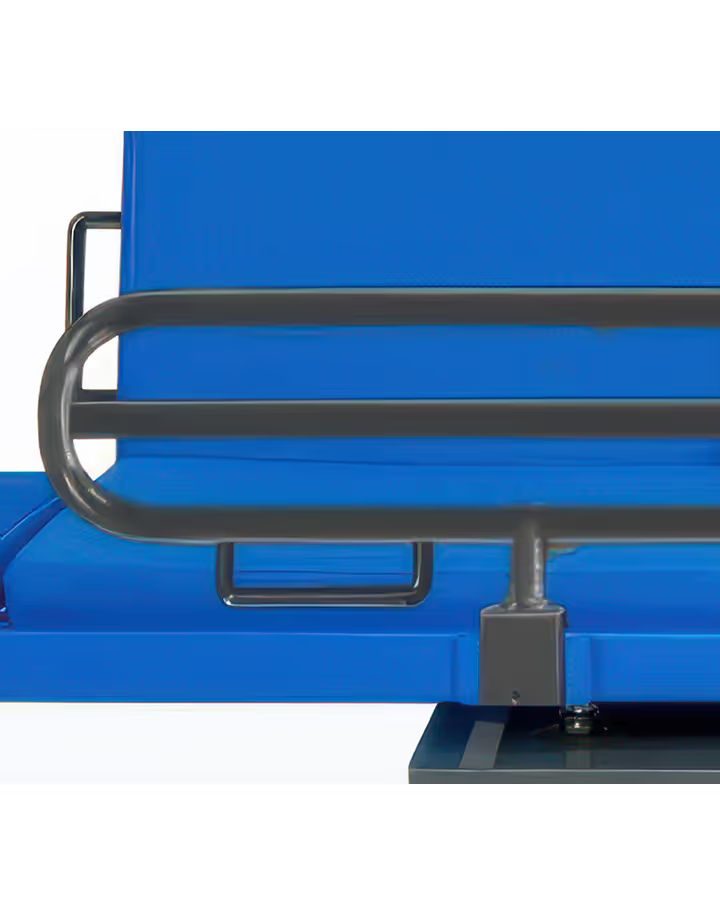
Optional Frame-Mounted Resting Rail
A secure rail that slots directly into the frame to provide added support and safety when the veteran intends to rest or sleep in the SideLyer.
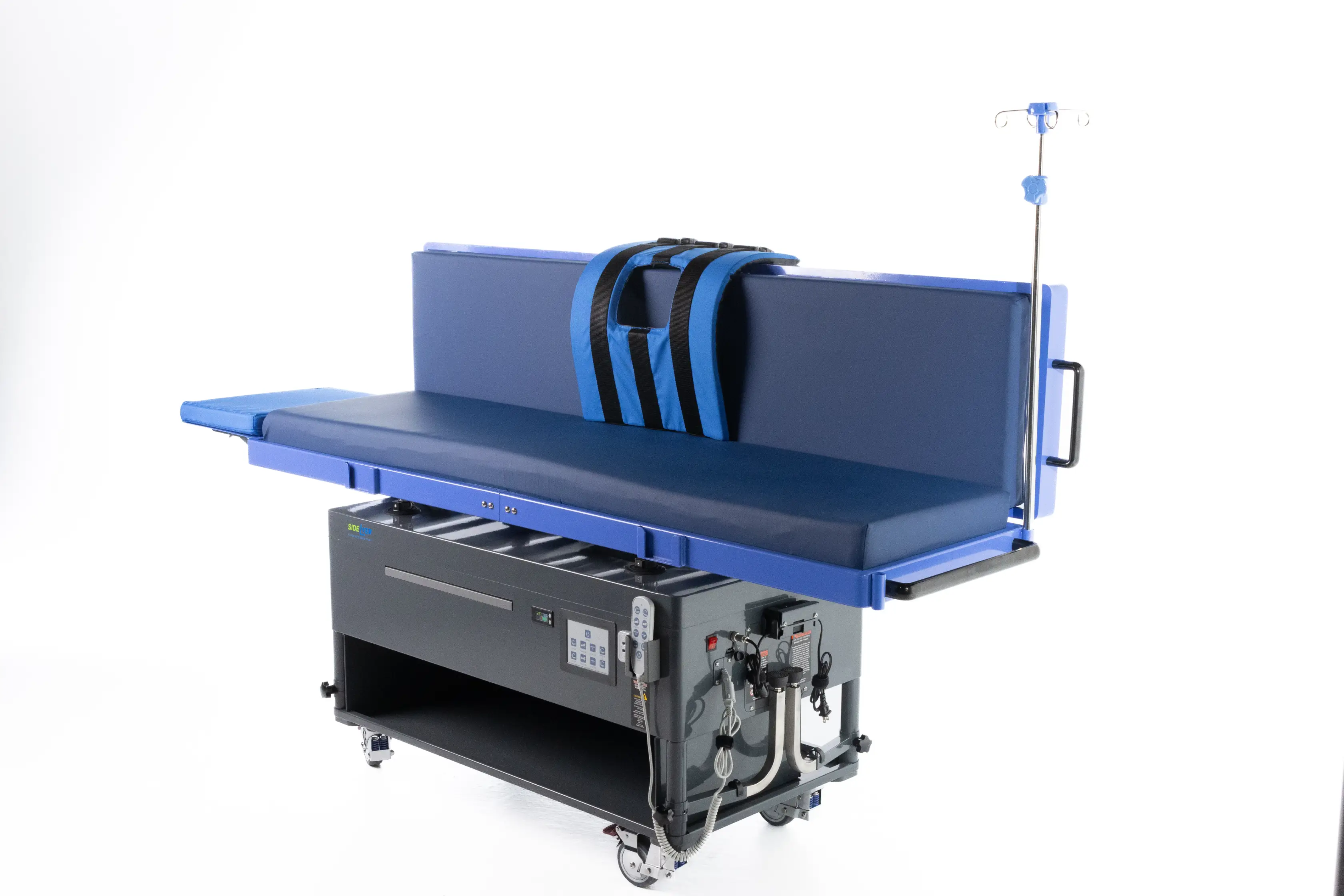
1
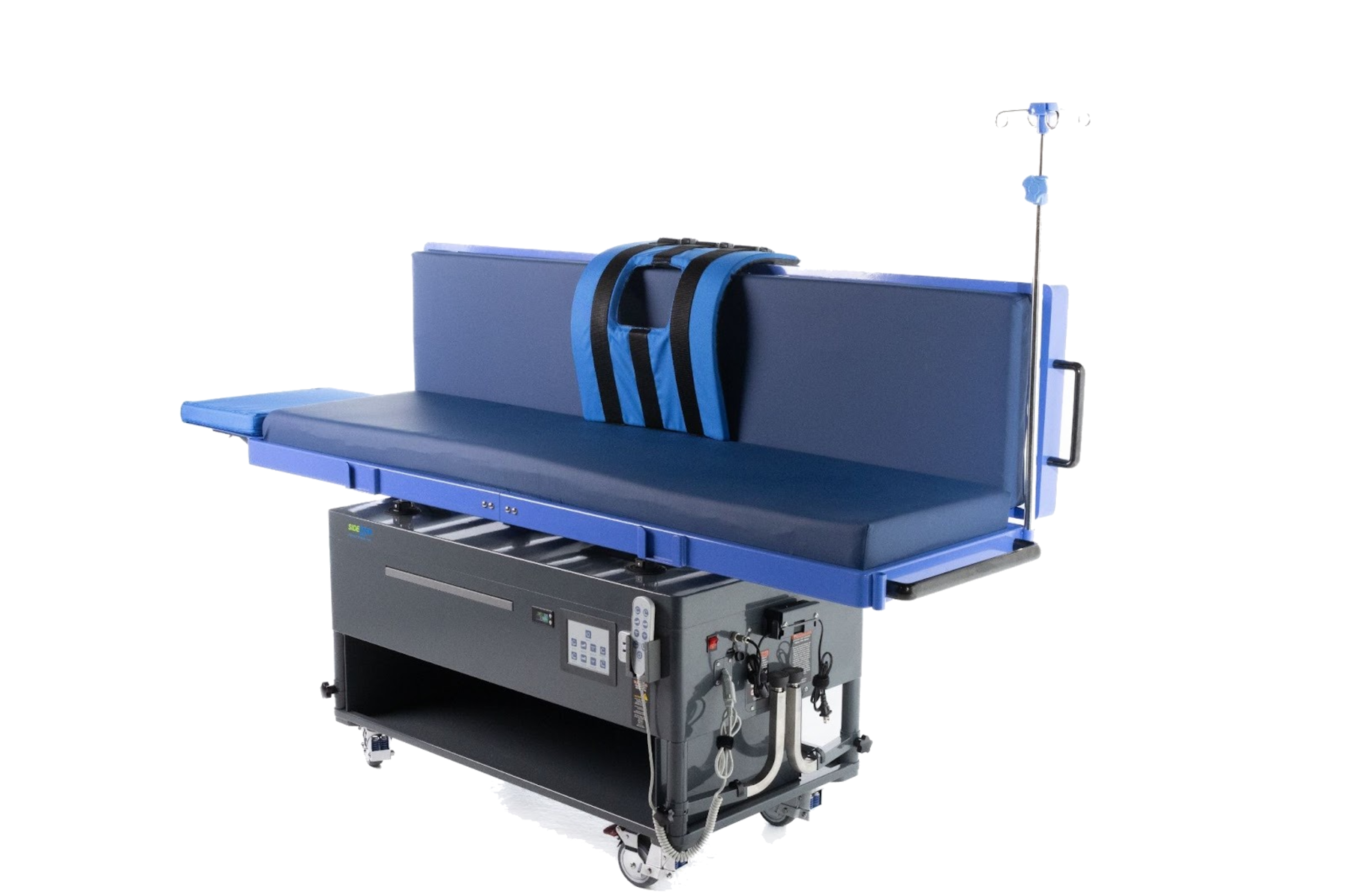
Base Configuration
Provides a neutral, stable lying position for general therapy, assessments, and safe patient positioning.
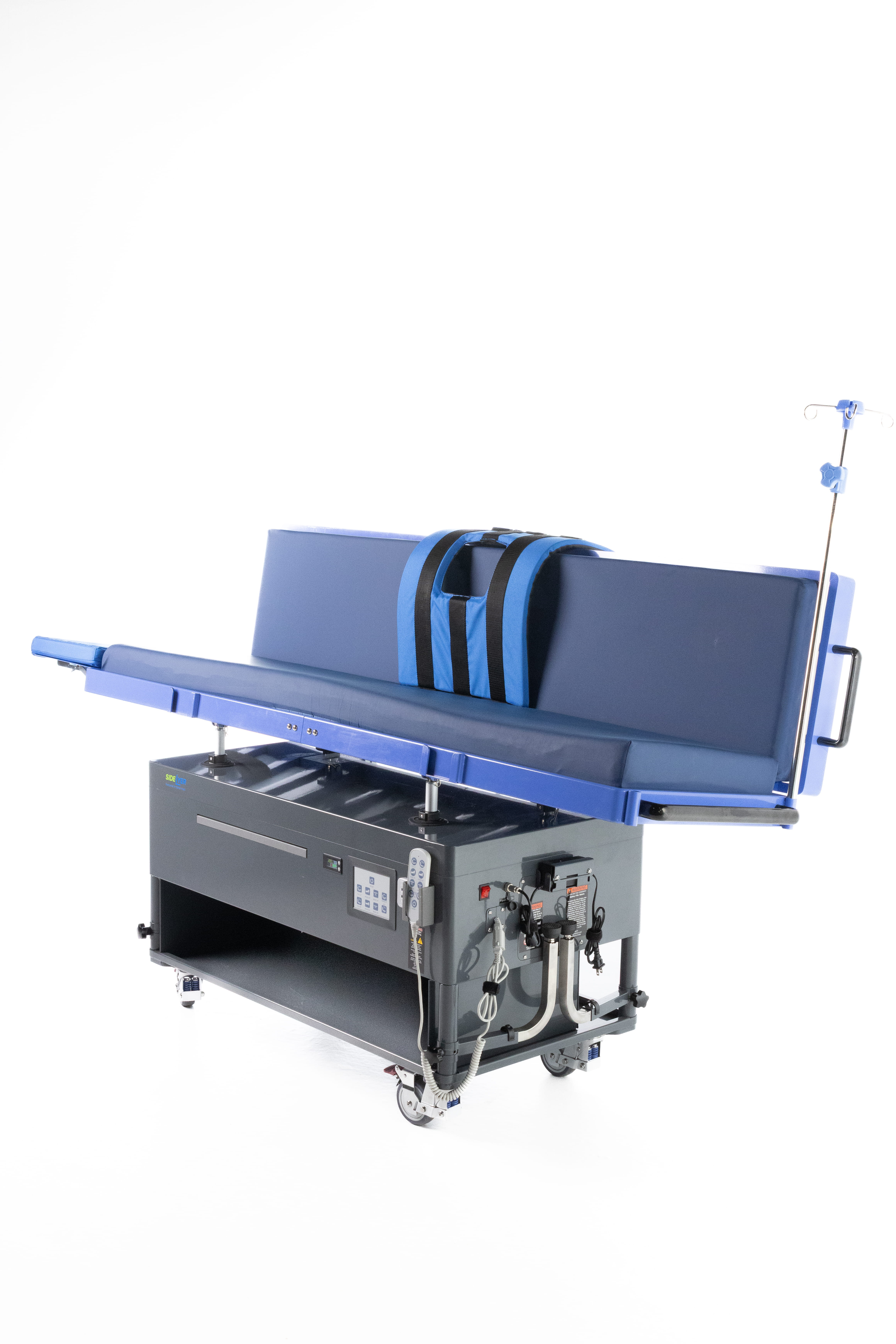
2
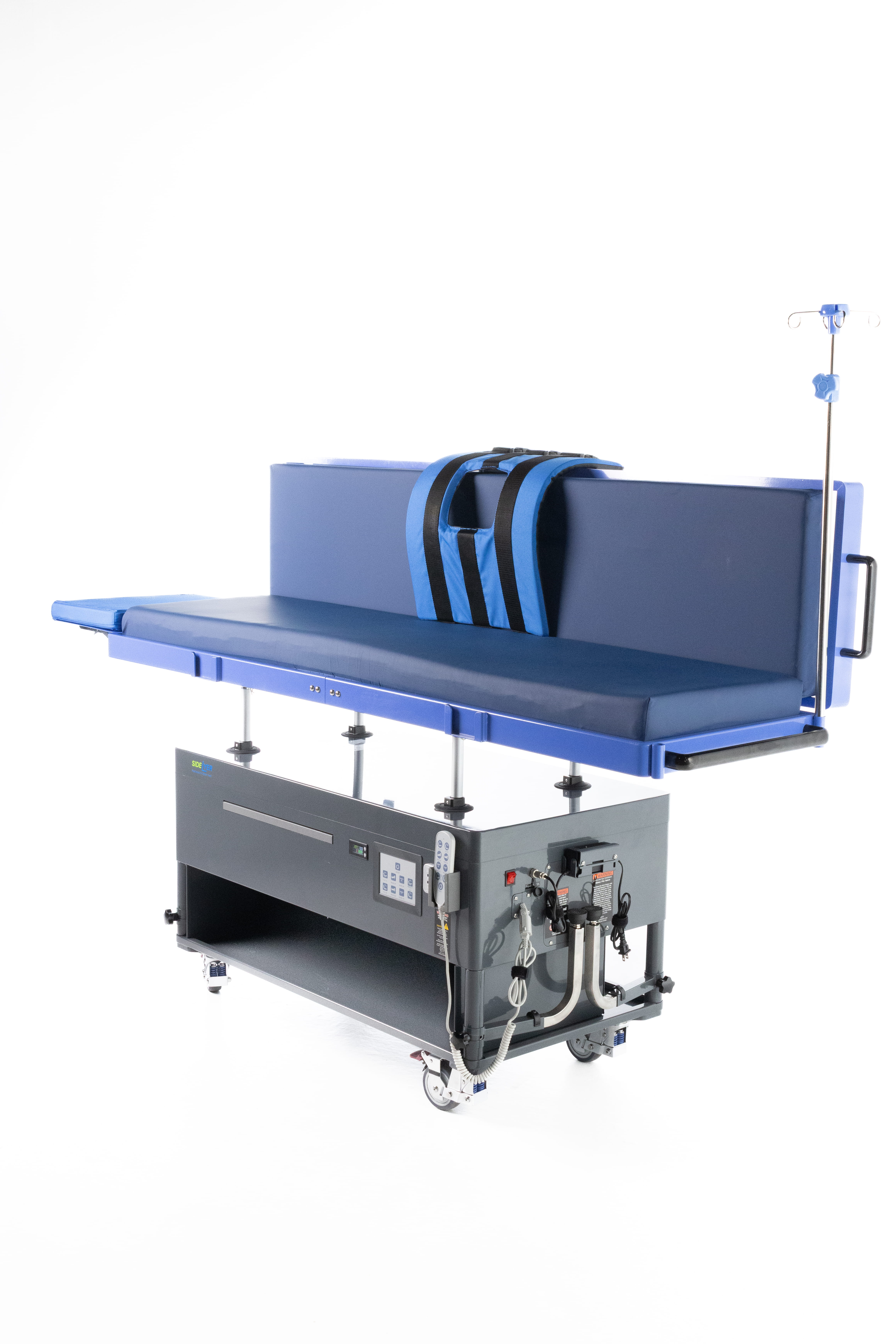
Lifted Position
Raises the entire platform vertically to support safer positioning at caregiver eye level, improving access for care activities and patient interaction.
3
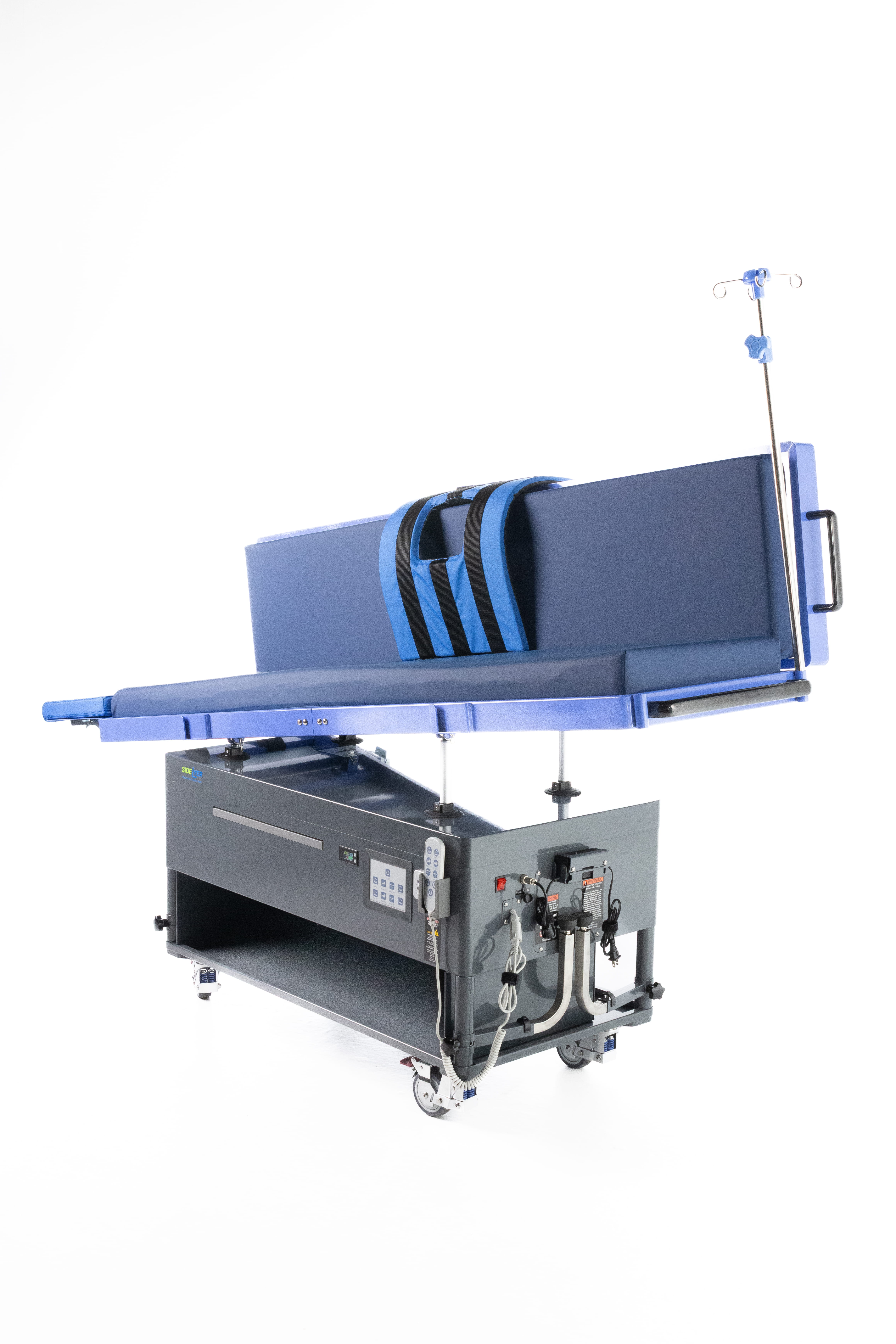
Head-to-Toe Angling
Tilts the body along the longitudinal axis to elevate the chest for respiratory therapy or reverse - angle positioning for improved circulation and edema management.
4
Rotational Adjustment
Enables right or left lateral tilt for weight shifting, pressure relief, and balance or trunk - control training without manual repositioning.
Frequently Asked Questions
Can SideLyer provide VA/DoD - specific materials such as a one-page brochure, a procurement-ready Capabilities Statement, or a clinical-evidence sheet for TBI/Polytrauma units?
Yes. These materials are currently in development. We will have a VA-specific brochure, a DoD procurement-ready Capabilities Statement (including CAGE, NAICS, and PSC codes), and a clinical-evidence sheet tailored for Polytrauma/TBI units available in early 2026.
Can SideLyer be incorporated into existing patient safety or lift team protocols?
Yes. SideLyer enhances existing lift team workflows by reducing the number of staff needed for high-risk turns and helping maintain compliance with Safe Patient Handling (SPH) standards.
Is SideLyer easy to clean and maintain?
Yes. The design uses wipe-clean medical surfaces and minimal seams to support infection-control protocols followed in VA and DoD facilities.
Does SideLyer support bariatric Veterans?
Yes, the SideLyer may be used for individuals up to 400 lbs.
How durable is SideLyer for heavy duty clinical use?
SideLyer is built with reinforced materials, a medical-grade actuator system, and components designed for high-volume clinical environments — including ICU, rehab, long-term care, and polytrauma centers.
What training is required for VA or DoD staff to use SideLyer?
Training is minimal. Most staff can operate SideLyer confidently within minutes. We offer onsite and virtual demonstrations, digital training materials, and ongoing support for clinical teams.
Does SideLyer help reduce pressure injuries in long-term care settings?
Absolutely. Motorized turning helps reduce the risk of pressure ulcers — especially for Veterans who are immobile, bed-bound, or recovering from major surgeries.
Is SideLyer compatible with standard VA and DoD hospital beds?
Yes. SideLyer is designed to be used with medical bed frames used across VA and DoD facilities. Our team can review bed specifications and ensure full compatibility prior to purchase.
Can the system be adapted for home care for Veterans?
Yes. SideLyer can be configured for home-based medical equipment setups, including wounded warrior or home hospice programs.
Is SideLyer quiet enough for shared VA rooms or night care?
Yes. SideLyer provides gentle, quiet and controlled repositioning. SideLyer is suitable for shared rooms and nighttime care where Veteran comfort and reduced disturbance are important.
Can SideLyer help in rehabilitation or physical therapy for Veterans?
Absolutely. Therapists can use precise tilt and elevation features to support wound care, respiratory therapy, and postural rehabilitation.
Does using SideLyer reduce staff injuries?
Yes. SideLyer greatly reduces manual lifting, lowering back and shoulder injury rates among VA nurses and caregivers.
How does SideLyer support Veterans with mobility challenges?
It provides smooth motorized repositioning, reducing pain and improving comfort for Veterans with spinal injuries, neurological conditions, chronic pain, or limited mobility.
Is SideLyer approved for use in VA and DoD medical facilities?
SideLyer meets the safety and durability standards required for VA, DoD, and military medical environments. We support procurement processes and can assist with integration planning.

Request a Demonstration
See how SideLyer can bring comfort, safety, and peace to your Veteran environment. Schedule a virtual demonstration or on-site evaluation with our clinical team.