Hospitals and Healthcare Organizations

Supporting Skilled Nursing
and Nursing Homes

Schedule a Demo

Preventing pressure ulcers, and reducing strain on
nursing staff
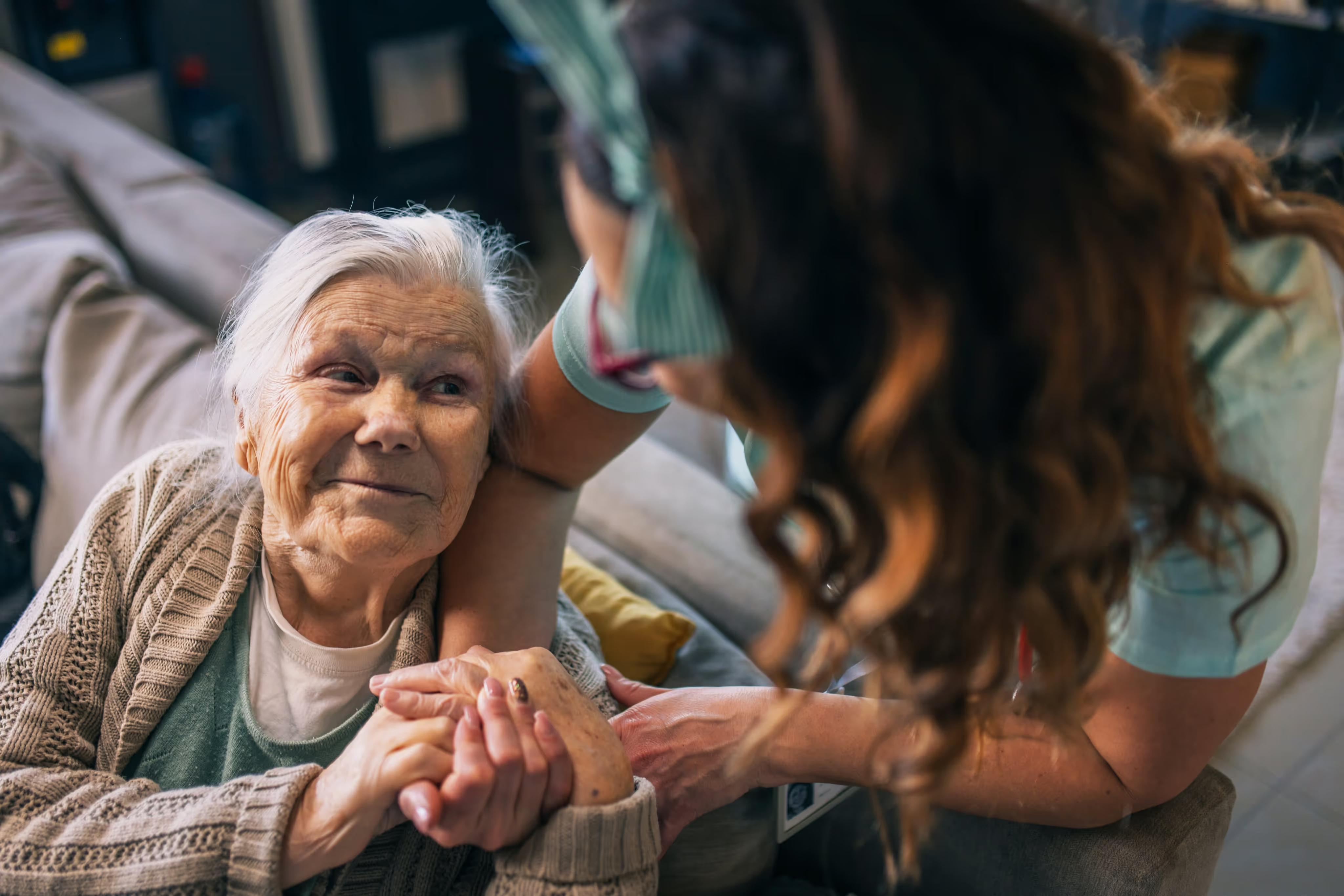
Elderly woman sitting on a couch holding hands with a caregiver who leans toward her.

Why SideLyer matters to skilled nursing care and the nursing home

  • Designed specifically for nursing homes, supporting safer workflows, reduced staff injuries, and better resident comfort

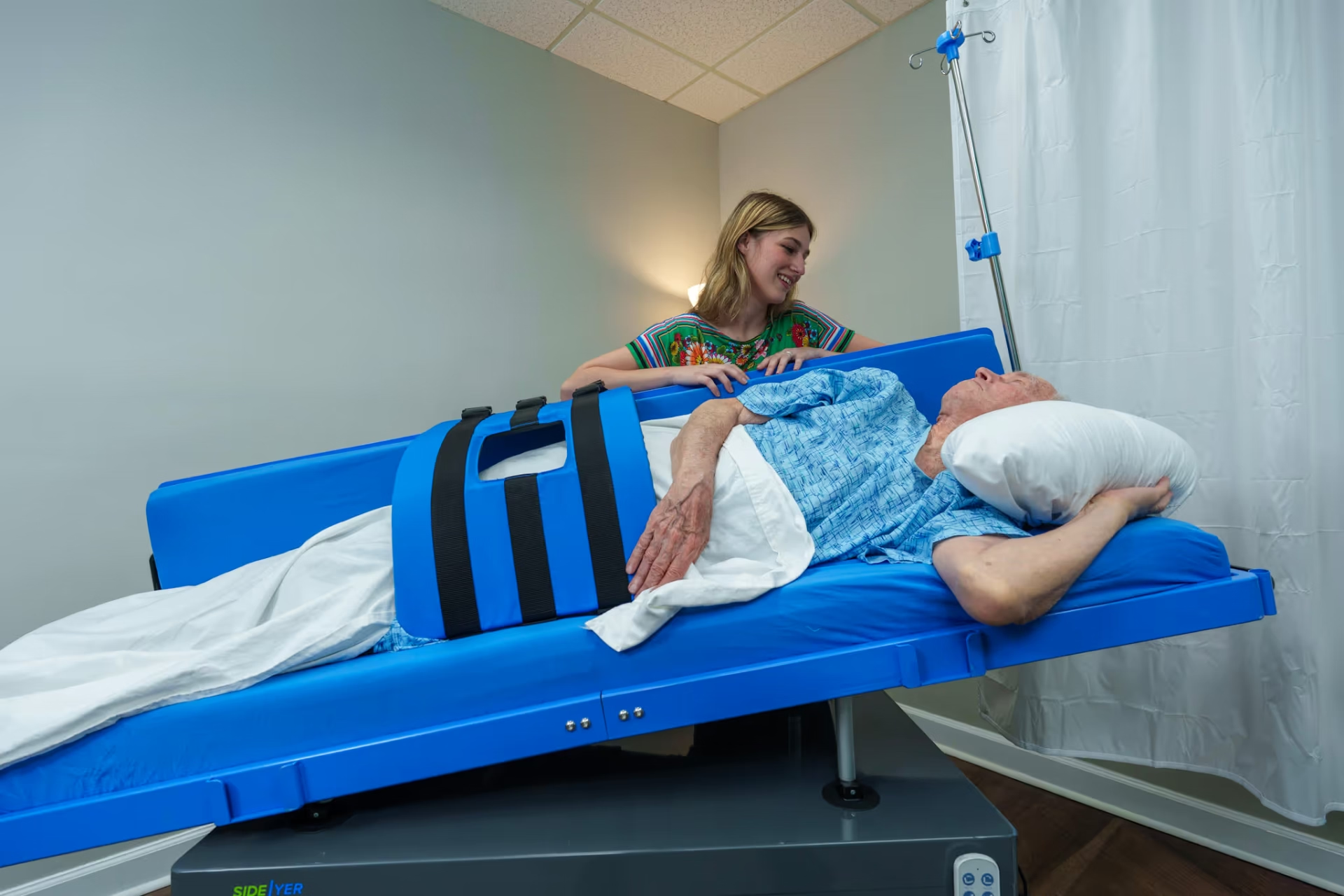
  • Motorized repositioning system that lets caregivers safely tilt, lift, and angle residents right, left, or head-to-toe—without strain or risk of injury

  • Delivers smooth, controlled movements and a full range of positioning at the push of a button

  • Replaces manual lifts, wedges, and repeated staff effort, reducing workload while improving consistency of care

For Families and Loved Ones

  • Families want assurance that their loved ones receive consistent, gentle, and evidence-based care

  • Reduced risk of pressure ulcers and skin breakdown

  • Improved comfort and circulation through micro-repositioning

  • Dignified eye-level interactions with visitors and caregivers

  • Fewer injuries and safer handling for residents and staff

  • “Knowing that mom or dad can be safely lifted to eye level or turned comfortably in bed makes all the difference”


Smiling elderly man in a wheelchair with two children hugging him and a woman in a yellow coat kneeling beside them outdoors.
Explore Features of the SideLyer

For Providers

  • SideLyer supports regular rehabilitation, recovery, and long-term comfort

  • Precisely angle the resident for therapy exercises or wound assessment

  • Lift the head or torso to eye level for better engagement and participation

  • Improve pulmonary and circulatory function with safe tilt adjustments

  • Support contracture management and postural therapy

  • SideLyer is more than a bed—it’s a clinical positioning tool that enhances therapy compliance and outcomes

For Nursing Operators & Administrators

  • Improve Outcomes. Reduce Liability. Boost Satisfaction.

  • Reduce staff injuries due to frequent manual lifting

  • Resident comfort with personalized and repeatable positioning

  • Family confidence with visible technology-driven care

  • Integrate seamlessly into existing workflow and care protocols
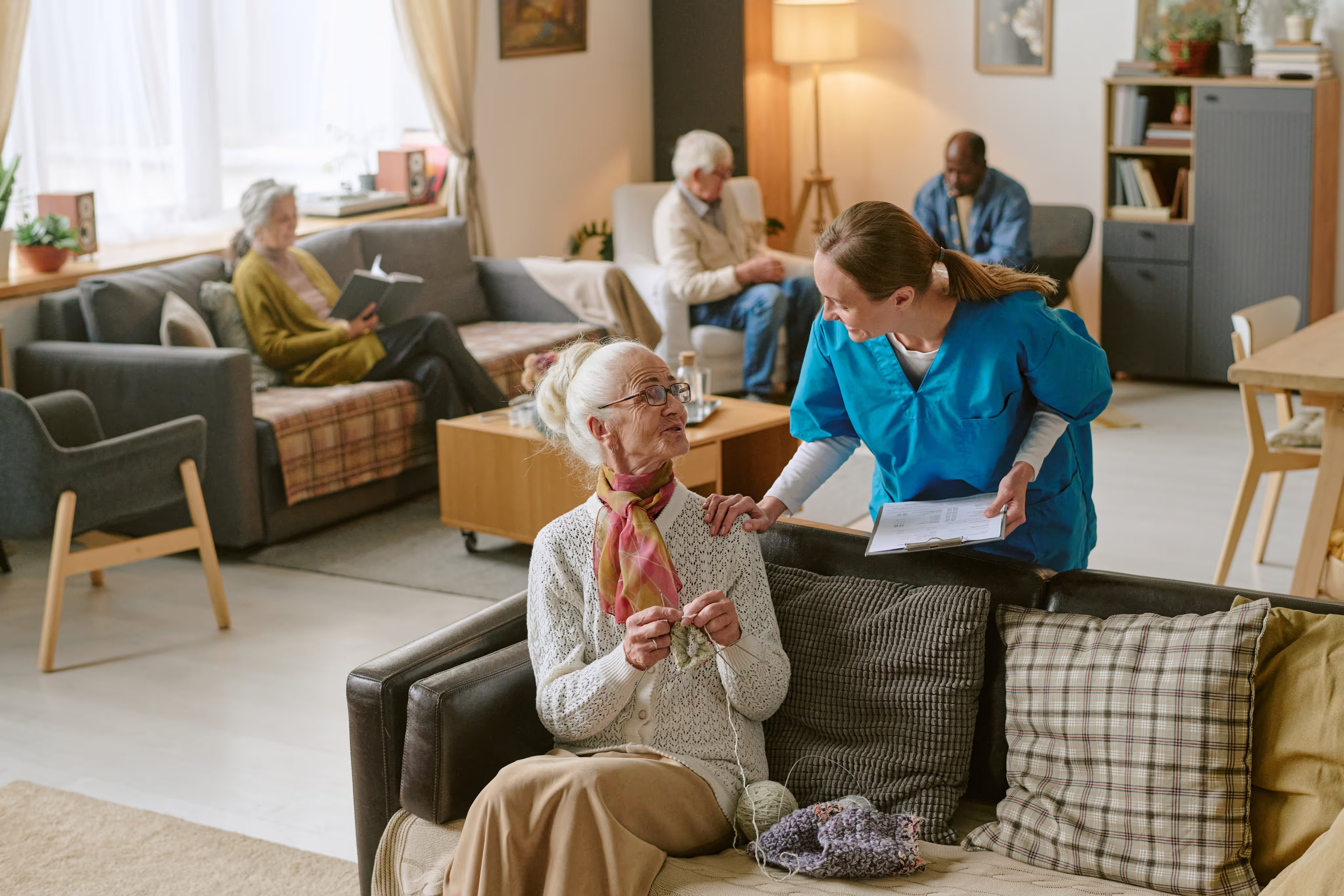
Caregiver in blue scrubs talking to an elderly woman knitting on a couch in a cozy living room with other seniors relaxing in the background.

Key features include

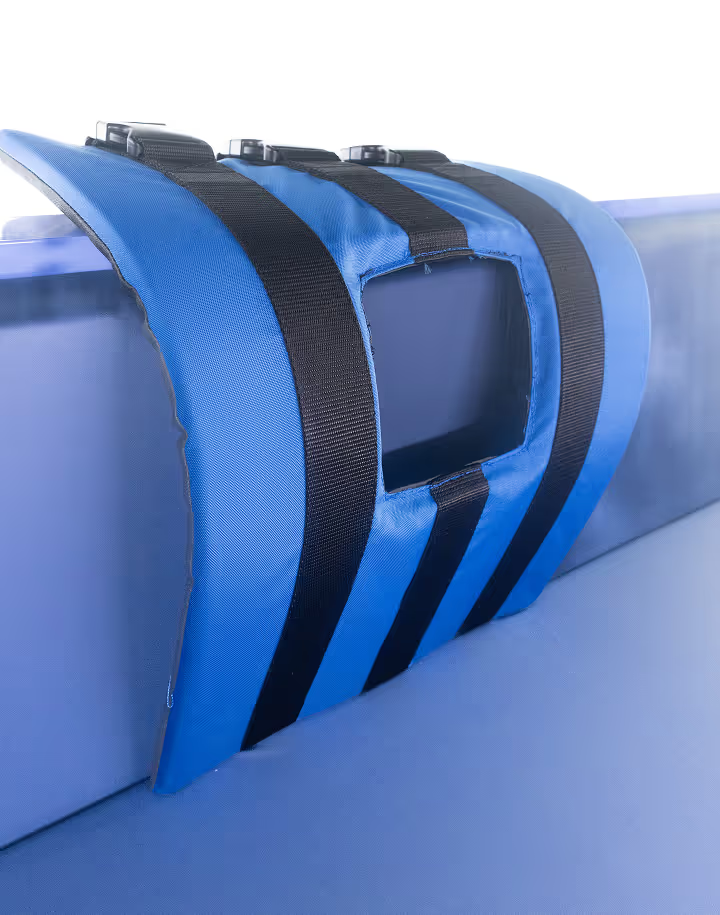
Blue padded water sports floatation device with black straps and a rectangular cutout in the center, attached to the side of a blue pool or tank.
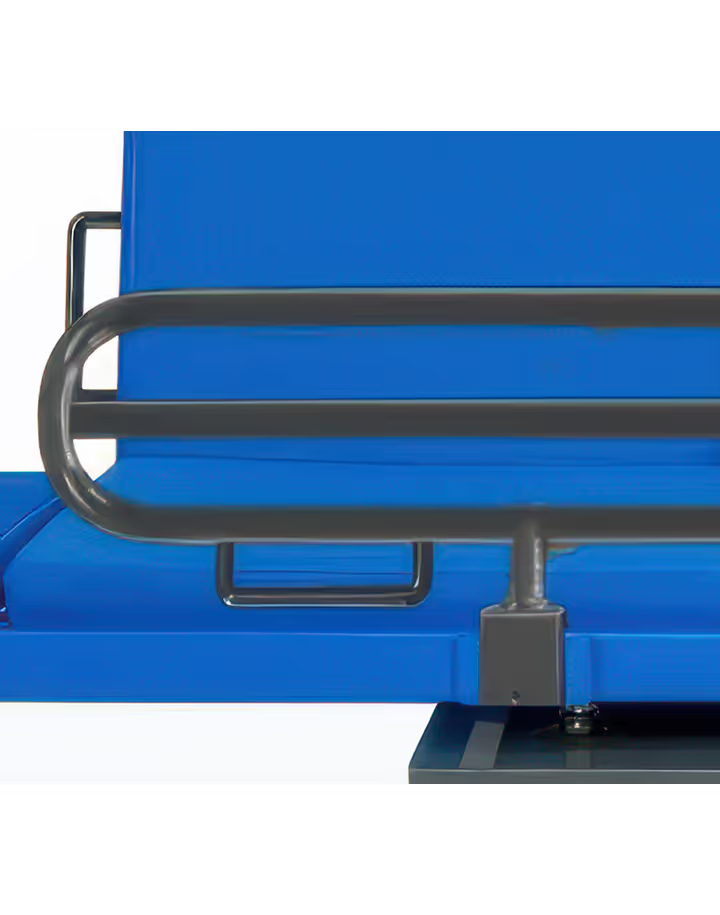
Close-up of a metal support leg with a black rubber base attached to a glossy blue surface.
Close-up of a blue padded medical examination table featuring a gray side lever platform and metal support legs.
Close-up of a blue cushioned medical examination or treatment table with attached electronic components and cables.
Close-up of a gray caster wheel with a red pedal lock labeled ON and OFF attached to a metal frame.
Close-up of a metal caster wheel with blue suspension springs attached to a piece of equipment.
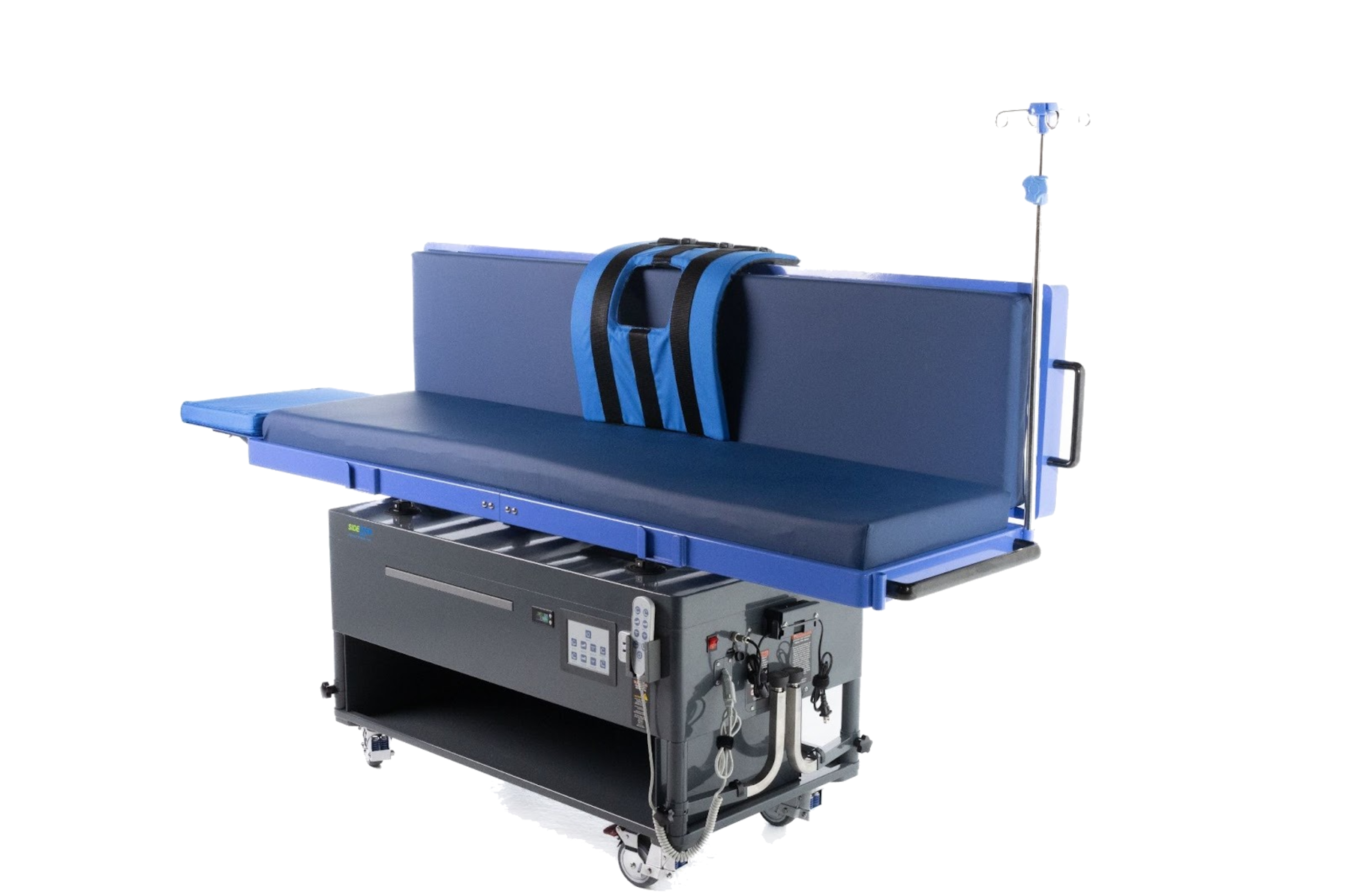
Close-up of a blue and stainless steel IV pole attached to the side of a blue hospital bed with adjustable straps.
Explore Features of the SideLyer
Blue padded water sports floatation device with black straps and a rectangular cutout in the center, attached to the side of a blue pool or tank.
Close-up of a metal support leg with a black rubber base attached to a glossy blue surface.
Close-up of a blue padded medical examination table featuring a gray side lever platform and metal support legs.
Close-up of a blue cushioned medical examination or treatment table with attached electronic components and cables.
Close-up of a gray caster wheel with a red pedal lock labeled ON and OFF attached to a metal frame.
Close-up of a metal caster wheel with blue suspension springs attached to a piece of equipment.
Close-up of a blue and stainless steel IV pole attached to the side of a blue hospital bed with adjustable straps.
Explore Features of the SideLyer

Advanced Movement and Therapeutic Angling

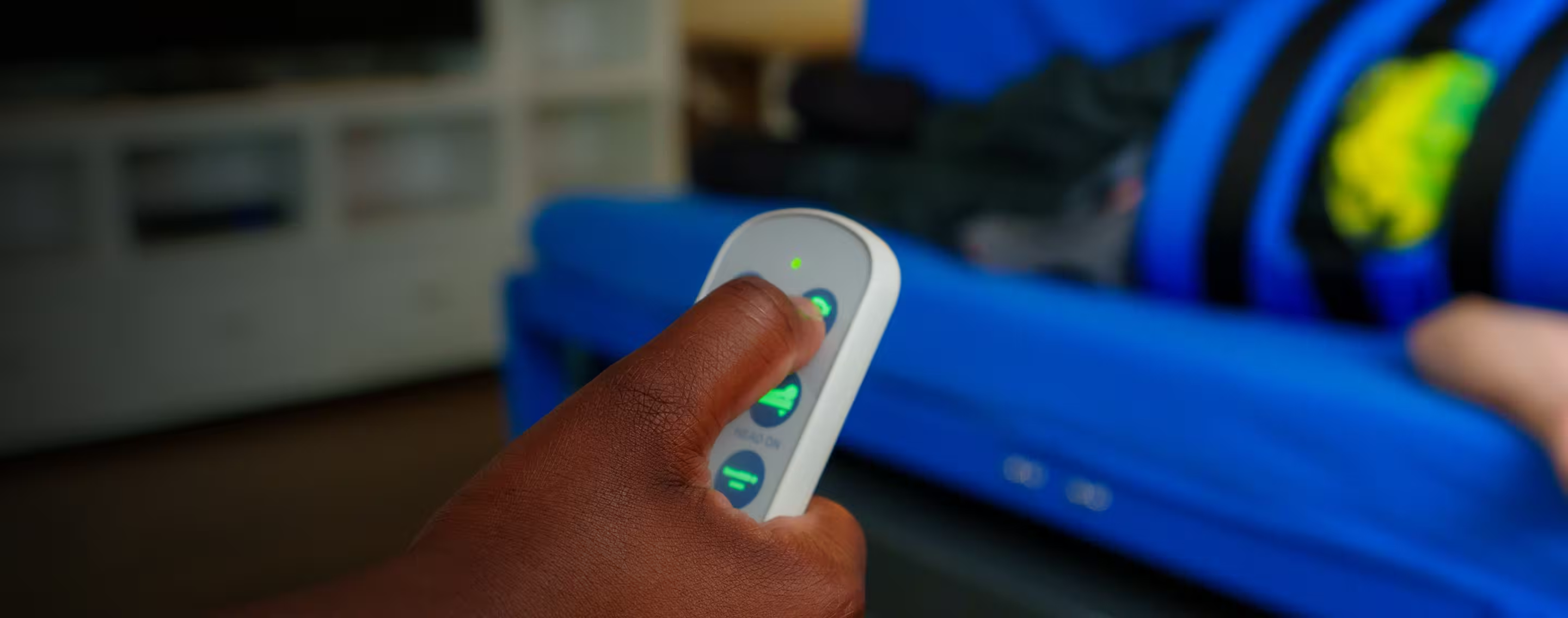
With a single touch, a nurse can elevate, angle or tilt the patient for the desired therapeutic position quietly and smoothly.

Advanced Movement and Therapeutic Angling

Frequently Asked Questions

How do we get started with SideLyer? +
Begin by scheduling a virtual demo with our team. During the demo, you can see how the system works and ask questions about how it could support patients. After the demo, you have the option of a 90-day free trial to see how SideLyer fits into your facility's care routine.
What warranty and support options are available? +
The SideLyer includes a one-year standard manufacturer's warranty on core components, with an optional extended 3-year warranty available for purchase. Our support team provides remote troubleshooting and on-site service as needed.
Can our health facility rent SideLyer instead of purchasing it? +
Yes. SideLyer is also available as a rental option for those who prefer not to purchase the system outright. The rental cost is $550 per month with a minimum commitment of 13 months.
Is there clinical evidence showing SideLyer reduces pressure injuries? +
Yes. Pilot studies and facility reports show significant reductions in pressure ulcer incidence when SideLyer is integrated into repositioning protocols. In fact, patients experience up to 10 times fewer pressure ulcers with SideLyer. Contact our sales team at sales@sidelyer.com to receive our white paper and peer-reviewed publications.
Does SideLyer require special room configurations or electrical setups? +
SideLyer plugs into standard outlets and fits within typical nursing home room layouts. SideLyer is designed to fit through normal household doorways and can be stowed easily.
Does SideLyer meet long-term care regulations? +
Absolutely. SideLyer is designed to comply with all relevant safety and care standards, including CMS guidelines and ergonomic recommendations.
Is SideLyer safe for frail residents? +
Yes. SideLyer is engineered with gentle speed, smooth motion, and weight-rated actuators to safely accommodate both frail and bariatric residents, including nursing home residents who may be at very high risk due to limited mobility or conditions such as spinal cord injury.
What maintenance or training is required? +
Minimal. Staff can be trained in under 30 minutes, and the system includes self-check diagnostics and modular components for easy servicing. This supports consistent use across teams, contributing to quality improvement and cost effectiveness over time.
How can families ensure their loved one benefits from SideLyer? +
Families can request facilities that use SideLyer and ask for its use in care plans for residents at risk of skin breakdown or requiring frequent repositioning. It can be especially helpful for those at risk of developing pressure ulcers due to prolonged pressure on vulnerable areas.
How does SideLyer reduce staff injuries? +
Through motorized repositioning and lifting, SideLyer minimizes manual strain and reduces the need for more frequent repositioning by staff. This lowers injury rates and supports safer care environments, even for residents with multiple risk factors. It also reduces workers’ comp claims by up to 28%.
Can SideLyer integrate with therapy or wound care protocols? +
Yes. Therapists can adjust tilt angles and elevation levels to support wound assessments, pulmonary therapy, or range-of-motion exercises. Precise control over body position helps relieve pressure points and supports pressure ulcer prevention within broader care plans.
What makes SideLyer different from standard hospital or nursing beds? +
Unlike conventional beds, SideLyer uses powered actuators to tilt and lift residents in multiple directions. This prevents the need for more frequent turning, helps reduce pressure ulcer development, supports less frequent repositioning without sacrificing care quality, and contributes to fewer new pressure ulcers across settings like skilled nursing facilities and the intensive care unit.
Request a Demonstration

Schedule a Demo

Experience how SideLyer can transform care delivery in your nursing care facility. Contact our team for a virtual demonstration or on-site evaluation to see SideLyer in action.

Schedule a Demo 
Schedule a Demo