How do we get started with SideLyer?
+
Families in Texas have the opportunity to schedule a virtual demo from their own home with
our team. During this session, you will see SideLyer at work and can ask questions about how it could
enhance the care you provide. After the demo, you can take advantage of a 90-day free trial to evaluate how
SideLyer fits into your daily caregiving routine.
Is SideLyer covered by insurance?
+
SideLyer can often be obtained through insurance, depending on eligibility criteria. The retail cost is
$11,000 if insurance applies, while families without coverage can expect a price of $6,900. Our staff is
available to help families navigate insurance options and understand the likely final cost based on their
circumstances.
Can families in Texas rent SideLyer instead of purchasing it?
+
Yes, families in Texas can choose to rent SideLyer instead of purchasing it outright. The monthly rental cost
is $550, and the rental period has a minimum commitment of 13 months.
When should we use SideLyer in a care plan?
+
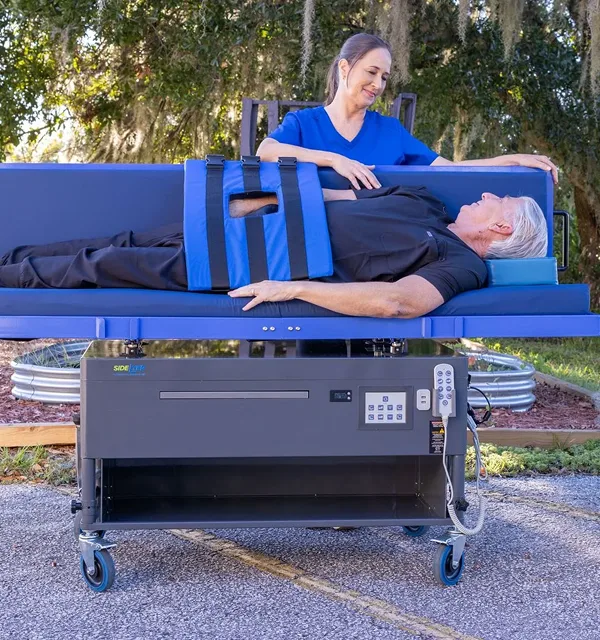
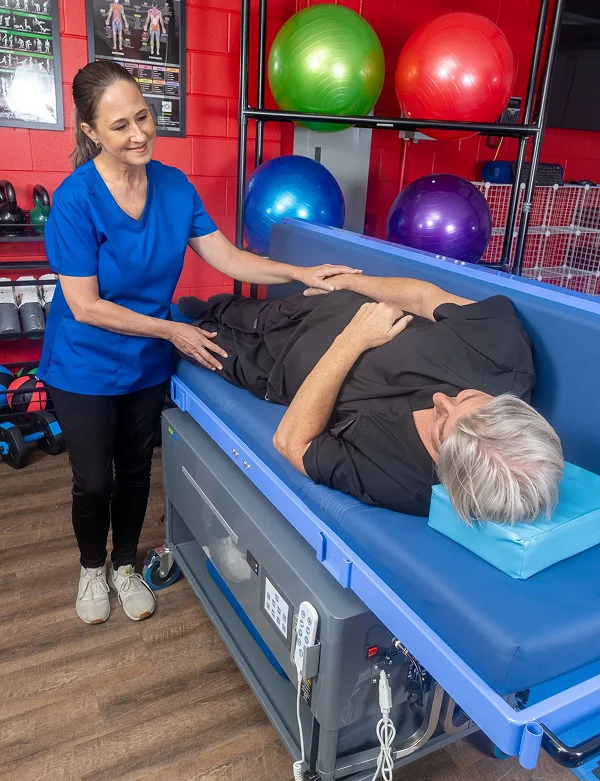
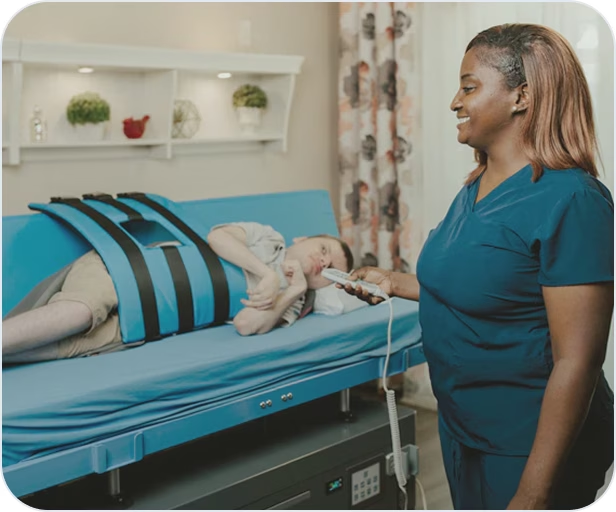
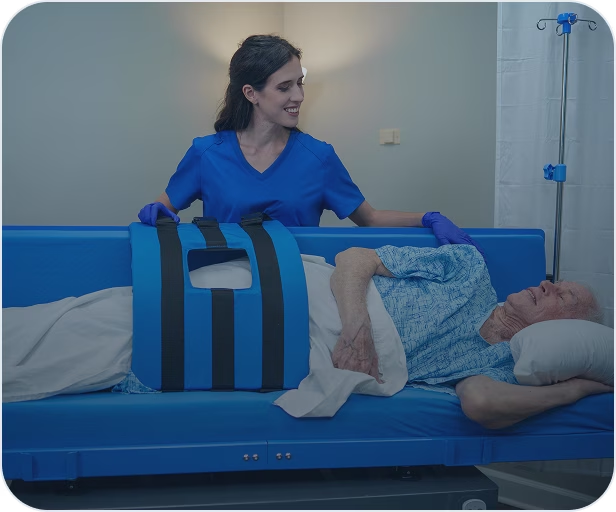
SideLyer is often utilized for individuals who cannot reposition themselves or require consistent assistance
to stay in safe positions throughout the day and relieve pressure points. Regular repositioning, as part of
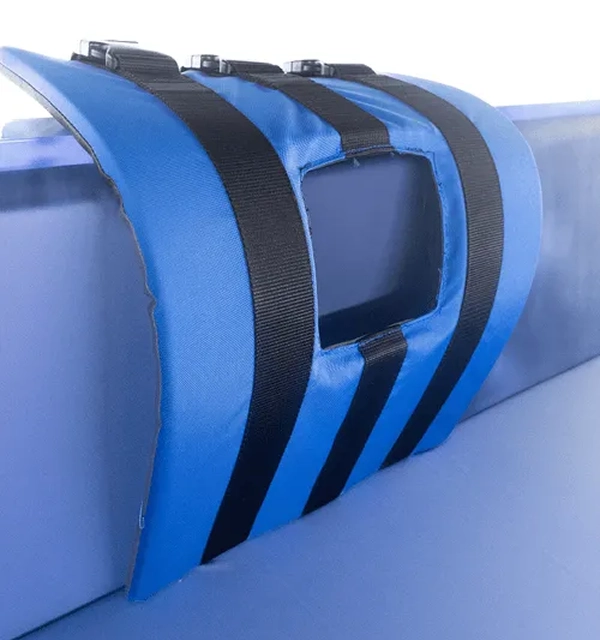
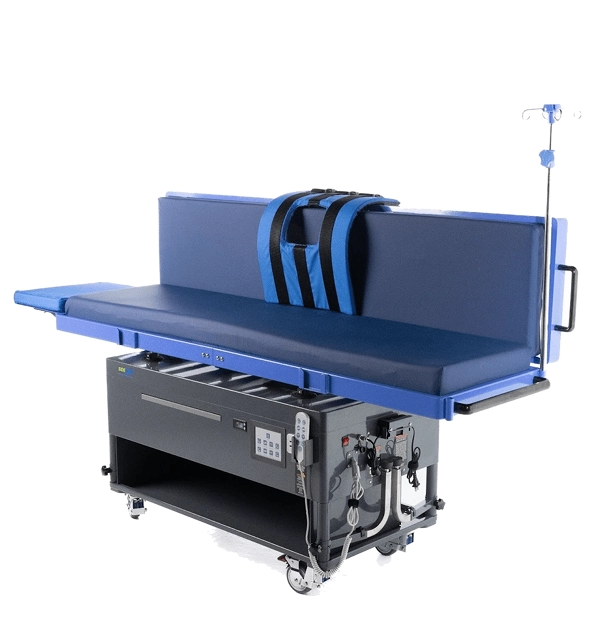
many care plans, helps protect areas at risk and supports proper circulation. SideLyer makes repositioning
straightforward, allowing caregivers to adjust angles using motorized controls while maintaining comfort,
protecting skin, and supporting daily care tasks.
How do pressure ulcers/pressure sores form in immobile patients?
+
Pressure sores usually form gradually when several risk factors are present at once. Limited mobility, wet or
damp skin, rubbing or friction, and sensitive skin all make injury more likely. These wounds typically start
as minor irritations but can become more serious if pressure is maintained in one area. Families and
caregivers often rely on frequent repositioning and supportive surfaces to prevent bed sores from developing.
What happens if an open sore develops on the skin?
+
The appearance of an open sore shifts focus toward protecting the wound and aiding the body in its natural
recovery. Proper treatment usually includes meticulous cleaning, keeping the skin dry, and protecting adjacent
healthy tissue from further pressure or irritation.
Can pressure ulcers become life-threatening if they are not treated?
+
In extreme situations, pressure wounds can progress into deep ulcers that affect the tissue beneath the
surface. As these wounds deteriorate, dead tissue may form, slowing healing and creating the potential for
additional complications. Treatment may involve focused wound care where clinicians remove necrotic tissue and
observe the area closely. Preventative measures help protect against these more serious developments.
How does pressure relief help prevent infection and skin damage?
+
Providing regular pressure relief enables proper circulation to areas that are under stress and helps defend
sensitive skin from injury. By minimizing pressure and monitoring known risk factors, caregivers can prevent
infections and stop minor issues from worsening. When positioning support is reliable and consistent, it
protects compromised skin and allows the body to recover safely before serious harm occurs.
What happens if dead tissue develops in a pressure wound?
+
When a pressure wound contains dead tissue, it is a sign that the skin and underlying tissue have been
harmed due to sustained pressure and limited circulation. Healing requires protecting the surrounding skin,
supporting recovery, and improving how the individual is positioned. By alleviating pressure on vulnerable
areas, caregivers can help prevent new injuries from developing.
SideLyer makes it easier for caregivers to reposition loved ones consistently, helping to reduce the risk
of bed sores.
How did the SideLyer originate?
+
The origin of the SideLyer dates back more than a decade, when a night nurse at Quest Inc. identified a
serious challenge. Residents who could not reposition themselves were experiencing preventable pressure
injuries, and caregivers were being hurt during manual lifting tasks. With the help of her carpenter
husband, she built the first SideLyer by hand from wood, creating various sizes tailored to each resident.
These early models were decorated and adapted with colors, stickers, trays, and storage options,
transforming into a widely appreciated tool that improved safety, comfort, and engagement. Over the years,
the concept advanced into a patented motorized system developed to meet industry standards.
What is Quest Inc., and how is it related to SideLyer?
+
Quest Inc. has spent more than 60 years serving as a nonprofit provider of housing, care, and support for
individuals with developmental disabilities. The SideLyer was invented within its residential care program
to help prevent pressure ulcers, improve the daily lives of residents, and reduce injuries among caregivers.
Today, Quest Inc. continues to shape the evolution of SideLyer by sharing decades of practical insight that
inform its design, safety, and clinical direction.
Watch our story:
What impact has SideLyer had on individuals in Texas and their families?
+
Families in Texas have seen clear improvements in comfort, a decrease in pressure sores, and greater
opportunities for social engagement. Many describe feeling relieved that their loved one is safer, more
comfortable, and properly positioned throughout daily care.
As one Quest Inc. parent shared, “Most of her pressure is not where she can have a skin breakdown. It takes
the pressure off the body.”
Others have shared that wounds they once believed would take months to heal improved in a much shorter time
due to consistent repositioning practices.