How do we get started with SideLyer?
+
Start by scheduling a virtual demo with our team all the way from California. During the
demo,
you can see exactly how SideLyer works in action and ask any questions about how it could support patients
in
your facility.
After the demo, you have the option to try a 90-day free trial, giving your staff the chance to see how
SideLyer fits into your daily care routines and enhances patient safety and comfort.
Is SideLyer covered by insurance?
+
SideLyer can often be obtained through insurance coverage, depending on individual eligibility and policy
requirements. The standard retail price for the system is $11,000 when insurance applies, or $6,900 if
purchased without insurance. Our knowledgeable team is available to guide families through coverage options,
explain potential out-of-pocket costs, and help clarify how the final expense may vary based on each specific
situation.
Can our health facility in California rent SideLyer instead of purchasing it?
+
Yes, SideLyer is offered as a rental for those in California who do not wish to purchase the system outright.
Renting costs $550 per month and requires a commitment of at least 13 months. This approach provides families,
caregivers, and care facilities with access to SideLyer’s full capabilities while offering a flexible solution
for long-term care management.
When should we use SideLyer in a care plan?
+
SideLyer is commonly employed when a patient cannot move independently or requires ongoing support to maintain
safe positions throughout the day and relieve pressure on sensitive areas. Within many care plans, regular
repositioning is essential to protect vulnerable parts of the body from prolonged pressure and to promote
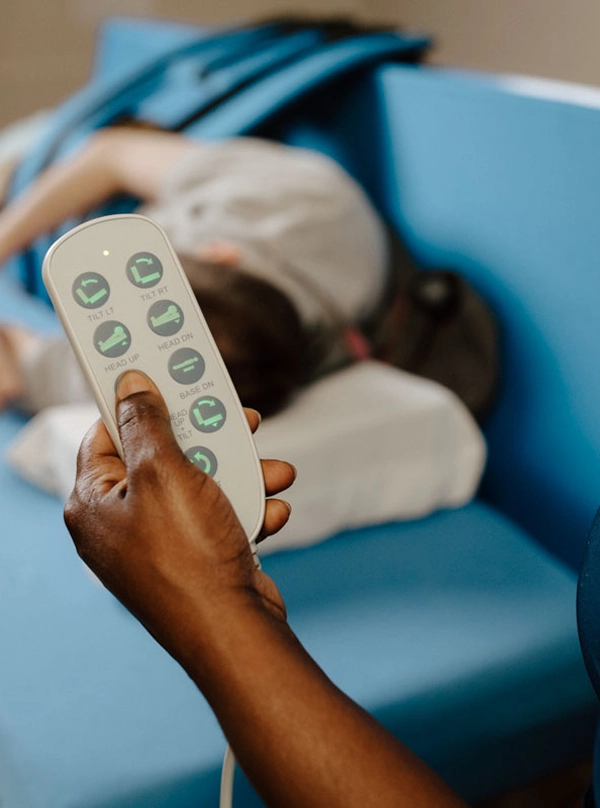
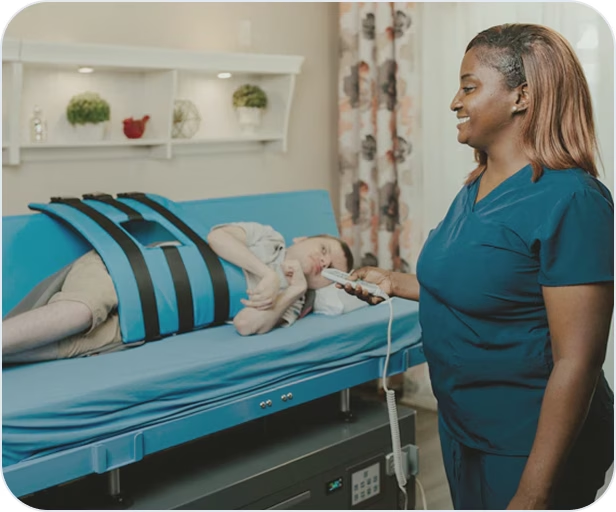
proper circulation. SideLyer simplifies this process by giving caregivers easy access to motorized controls,
allowing them to adjust positioning safely and efficiently. This approach helps maintain patient comfort while
supporting skin integrity and daily care routines.
How do pressure ulcers/pressure sores form in immobile patients?
+
Pressure injuries frequently develop slowly as several contributing factors interact. Restricted movement,
skin exposure to moisture, friction from contact with surfaces, and overall skin fragility all raise the risk
of injury. Although these wounds often begin as small areas of redness or discomfort, continued pressure on
the same spot can cause them to deteriorate further. Families and healthcare professionals focus on regular
repositioning and the strategic use of supportive surfaces to prevent bed sores and maintain healthy skin.
How does SideLyer support care when dead tissue is present?
+
SideLyer enhances patient positioning, allowing clinicians to reach affected areas more easily without the
need for frequent manual turns. By maintaining proper alignment and support, it promotes safer management of
pressure ulcers while healthcare teams perform necessary wound care, including the removal of dead tissue and
ongoing monitoring of healing progress.
How does SideLyer help prevent pressure ulcers in high-risk patients?
+
SideLyer assists in pressure ulcer prevention by maintaining consistent repositioning schedules, reducing the
prolonged pressure that contributes to skin breakdown. It also addresses risk factors including immobility,
inadequate nutrition, and compromised tissue health. In the case of patients with spinal cord injuries,
SideLyer helps minimize the risk of initial pressure ulcers and significantly reduces the likelihood of
progression into severe or decubitus ulcers, promoting better outcomes for skin integrity and overall health.
How does SideLyer support pressure reduction for at-risk patients?
+
SideLyer provides reliable and consistent pressure reduction, helping to relieve stress on vulnerable areas,
maintain healthy blood flow, and reduce discomfort for individuals with limited mobility. When used in
combination with specialized support surfaces, it helps prevent the development of chronic pressure ulcers,
reduces the risk of infections, and supports healing of existing chronic wounds.
How does SideLyer support daily skin care routines?
+
SideLyer provides valuable support for staff in keeping vulnerable skin clean, dry, and protected. By making
it easier to detect changes in skin coloration or early signs of irritation, it allows caregivers to act
quickly to prevent complications. The system works in harmony with care plans that include moisture barrier
creams, supporting comprehensive wound prevention and optimal skin health outcomes.
Can SideLyer help manage long-term wound risks?
+
Yes, SideLyer provides reliable support for reducing pressure on vulnerable areas and maintaining consistent
positioning. By doing so, it helps prevent minor pressure injuries from developing into chronic ulcers and
promotes more positive outcomes for individuals with long-term wounds.
How did the SideLyer originate?
+
The SideLyer originated more than ten years ago when a night-shift nurse at Quest Inc. noticed that
residents who could not reposition themselves were developing preventable pressure injuries. At the same
time, caregivers were frequently sustaining injuries while performing manual lifts. Recognizing the need for
a safer solution, she collaborated with her husband, a skilled carpenter, to construct the first handcrafted
SideLyer from wood. These early models were created in multiple sizes to accommodate the unique needs of
each resident.
These initial prototypes were customized with vibrant colors, decorative stickers, convenient trays, and
storage options, turning the device into a tool that was not only functional but also engaging for
residents. Over time, the simple handcrafted concept evolved into a fully patented, motorized system,
designed to meet rigorous industry standards while improving both safety and comfort for those who rely on
it.
What is Quest Inc., and how is it related to SideLyer?
+
Quest Inc. has built a sixty-year legacy of delivering homes, care, and dedicated support for individuals
with developmental disabilities. Within its residential care program, the SideLyer was developed to prevent
pressure ulcers, enhance daily comfort for residents, and protect caregivers from injuries associated with
manual repositioning. Today, Quest Inc. continues to provide essential guidance, drawing on decades of
firsthand experience to influence SideLyer’s design, safety protocols, and clinical objectives, ensuring it
continues to meet the highest standards of care.
Watch our story:
What impact has SideLyer had on individuals in California and their families?
+
Individuals in California who receive consistent repositioning support have shown notable improvements in comfort, a reduction in pressure wounds, and a higher level of social interaction throughout the day. The benefits extend beyond physical health, as enhanced comfort allows for more engagement in daily routines and interactions with caregivers and family.
Families often express relief knowing their loved ones are safer, better positioned, and more comfortable. One Quest Inc. parent shared, “Most of her pressure is not where she can have a skin breakdown. It takes the pressure off the body.” Hearing these stories reassures families that attentive care is making a meaningful difference.
Others noted that wounds previously expected to take “months and months” to heal recovered much more quickly due to consistent repositioning and careful monitoring. The proactive approach significantly improves recovery timelines and demonstrates the value of structured, attentive care.