How do we get started with SideLyer?
+
In Georgia, families and care facilities can begin by scheduling a virtual demo with our team of specialists. This session allows participants to observe SideLyer in action and ask in-depth questions about its contribution to safe and effective patient care. Once the demonstration is complete, you may choose to participate in a 90-day free trial, providing an opportunity to integrate SideLyer into your daily care processes and experience improvements in patient comfort, engagement, and overall safety.
Is SideLyer covered by insurance?
+
Eligible patients may have the opportunity to obtain SideLyer through insurance, with coverage varying depending on policy terms and specific eligibility criteria. When insurance coverage applies, the retail price is $11,000, while those purchasing independently without coverage will pay $6,900. Our experienced team supports families by reviewing insurance options, clarifying coverage details, and helping them anticipate the final cost, ensuring decisions are made with transparency and confidence.
Can our health facility in Georgia rent SideLyer instead of purchasing it?
+
SideLyer is available for rental to individuals and families in Georgia who prefer not to invest in purchasing the system outright. The rental agreement grants full access to all of SideLyer’s features for a monthly fee of $550, requiring a commitment of 13 months. This option offers a flexible and practical solution for those exploring long-term repositioning support while maintaining financial and operational adaptability.
When should we use SideLyer in a care plan?
+
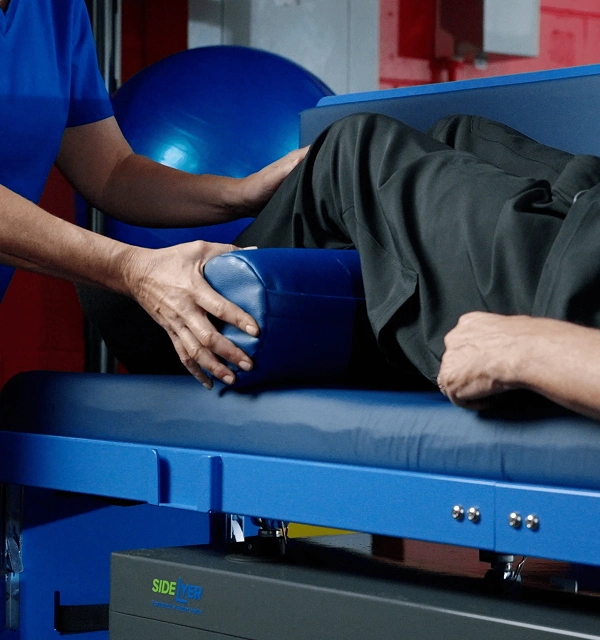
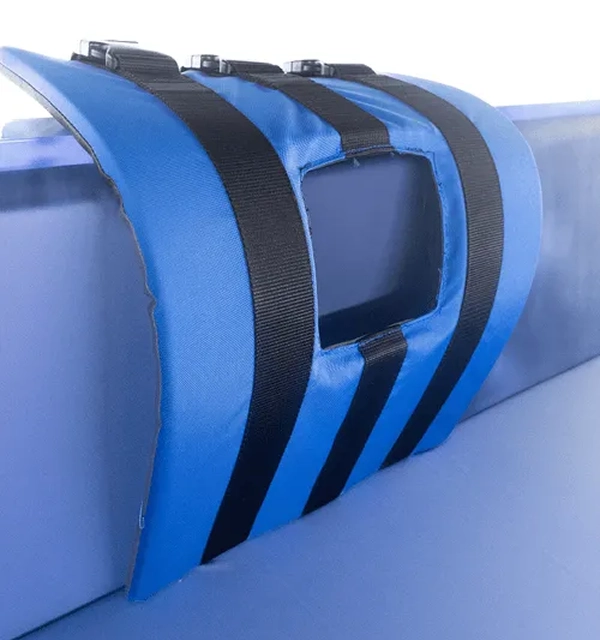
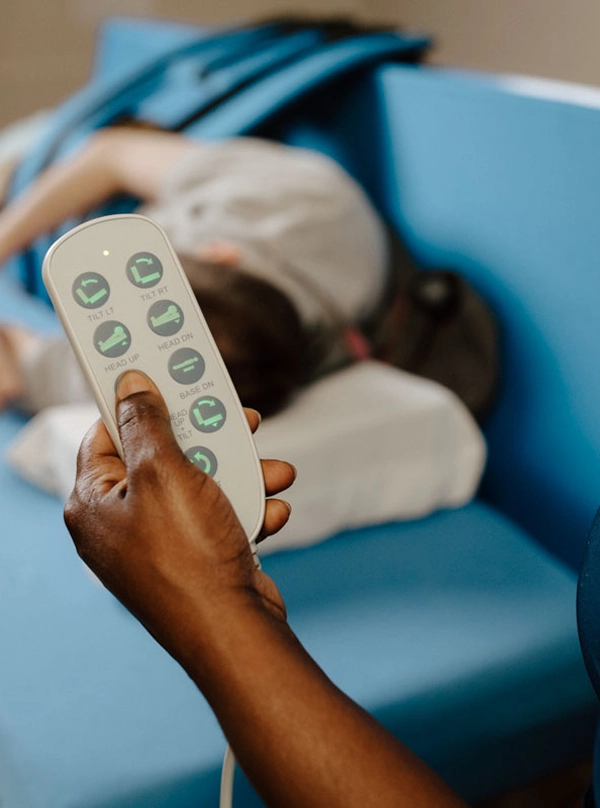
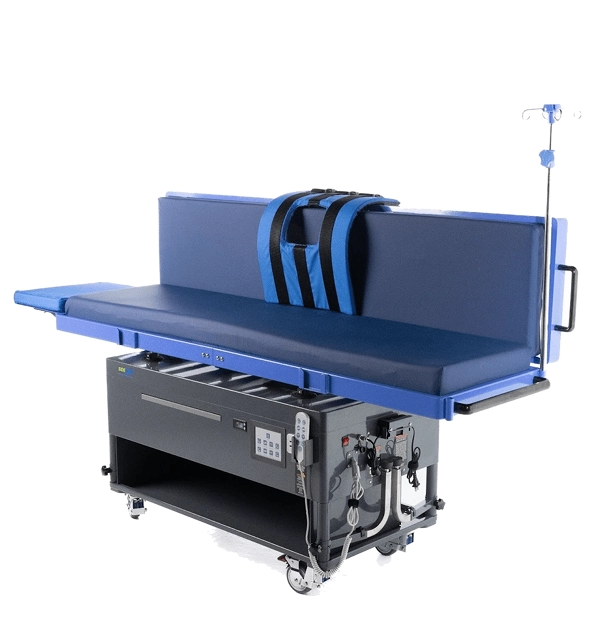
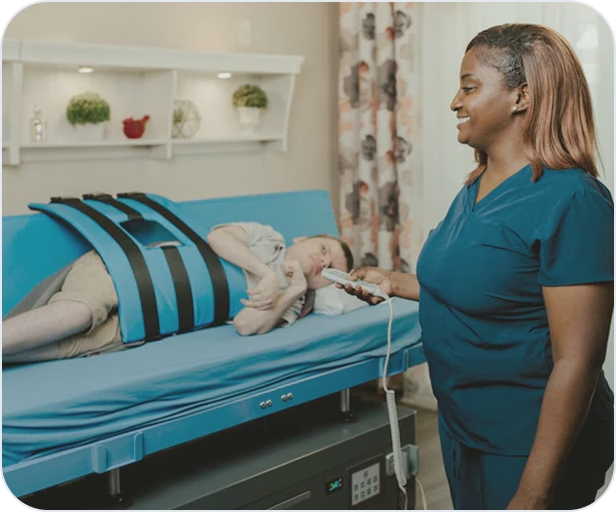
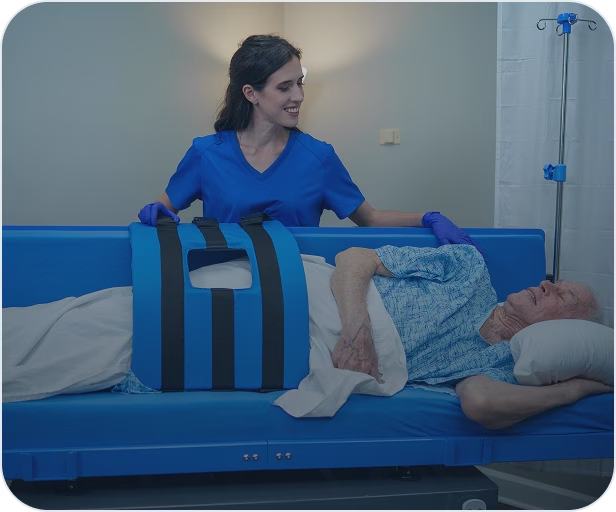
SideLyer is designed for patients who cannot move independently or who require constant support to remain in positions that relieve pressure. Maintaining these positions is essential for protecting skin, improving blood flow, and preventing pressure-related injuries. The motorized system allows caregivers to adjust patient positions with ease, reducing physical strain while maintaining comfort and enabling consistent adherence to care protocols.
How do pressure ulcers/pressure sores form in immobile patients?
+
Pressure sores occur when continuous pressure, friction, and moisture weaken the skin and tissues over time. Patients with limited mobility, fragile skin, or underlying health conditions are particularly at risk. Initial signs may be mild irritation or redness, but prolonged exposure can result in severe wounds. Effective prevention relies on regular repositioning and the use of specialized support surfaces.
How does SideLyer support care when dead tissue is present?
+
SideLyer keeps patients properly positioned while caregivers perform necessary interventions, reducing repetitive lifting and repositioning. This support ensures safer pressure injury management, including the removal of necrotic tissue and wound monitoring. The motorized system improves both caregiver efficiency and patient safety during complex wound care procedures.
How does SideLyer help prevent pressure ulcers in high-risk patients?
+
SideLyer helps prevent pressure ulcers by enabling caregivers to reposition patients in a controlled, systematic way, which minimizes prolonged pressure and reduces the risk of skin breakdown. It is particularly effective for those with limited mobility, circulation difficulties, or nutritional deficiencies, all of which increase vulnerability to pressure injuries. Patients with spinal cord injuries benefit from regular use because SideLyer lowers the chance of developing pressure ulcers and prevents the escalation of existing skin damage, supporting long-term skin resilience and overall well-being.
How does SideLyer support pressure reduction for at-risk patients?
+
Providing dependable and continuous pressure relief, SideLyer protects fragile skin, improves blood circulation, and minimizes the discomfort often experienced by immobile patients. When used in conjunction with appropriate support surfaces, it acts as a valuable tool for preventing chronic pressure injuries, limiting the risk of infection, and aiding caregivers in managing and promoting healing of long-standing wounds.
How does SideLyer support daily skin care routines?
+
By facilitating controlled and regular repositioning, SideLyer helps caregivers maintain clean, dry, and healthy skin for patients susceptible to pressure injuries. The system makes it easier to observe even minor changes in skin condition, which can be crucial for early intervention. Integrated into care plans that include moisture barrier protection, SideLyer provides reliable support to prevent pressure ulcers and enhance overall skin integrity.
Can SideLyer help manage long-term wound risks?
+
Yes, the SideLyer system supports immobile or mobility-limited patients by maintaining proper positioning and reducing sustained pressure. This consistent support lowers the risk of developing chronic pressure ulcers while also creating conditions that encourage healing of long-term wounds, promoting improved comfort and a more efficient recovery process.
How did the SideLyer originate?
+
More than ten years ago, a night-shift nurse at Quest Inc. observed that residents who were unable to move independently often developed pressure injuries, while caregivers were at risk from repeated manual lifting. She collaborated with her husband, a skilled carpenter, to create the first SideLyer from wood, carefully designing multiple sizes to suit the individual needs of residents.
The original devices were customized with thoughtful details, including vibrant paints, playful stickers, trays for convenience, and storage features, making the tools both functional and enjoyable for residents. This early innovation eventually grew into a patented, motorized SideLyer system that meets industry standards, improves safety and comfort for patients, and lessens the physical burden on caregiving staff.
What is Quest Inc., and how is it related to SideLyer?
+
Over the course of more than six decades, Quest Inc. has provided safe housing, individualized care, and broad-based support for people with developmental disabilities. It was within this residential care environment that the SideLyer was conceived as a practical solution to protect residents from pressure ulcers, improve comfort, and enhance overall quality of life. The device simultaneously reduces the risk of caregiver injury during repositioning, establishing itself as a central component of daily care routines. Today, Quest Inc.’s extensive hands-on experience continues to shape the evolution of SideLyer’s design, clinical safety measures, and applications.
Watch our story:
What impact has SideLyer had on individuals in Georgia and their families?
+
Care recipients in Georgia who experience regular and precise repositioning demonstrate improved comfort, fewer pressure wounds, and increased involvement in social and daily activities. This approach promotes not only physical health but also overall life satisfaction.
Family members often report peace of mind knowing their loved ones are positioned safely and comfortably at all times. One parent shared, “Most of her pressure is not where she can have a skin breakdown. It takes the pressure off the body.” Feedback like this reflects the reassurance and effectiveness of thoughtful, compassionate care.
In addition, caregivers have noted that wounds expected to take long periods to heal often show faster recovery when consistent and careful repositioning is applied. These results illustrate the value of attentive care routines for individuals with limited mobility.