How do we get started with SideLyer?
+
Begin by arranging a virtual demo with our team joining you from Texas. During the session,
you will see how SideLyer functions and can ask any questions about ways it might enhance patient care in
your facility.
After the demo, you have the option of a 90-day free trial to experience how SideLyer can seamlessly fit
into your facility’s daily routines and improve overall patient comfort and safety.
Is SideLyer covered by insurance?
+
SideLyer may be covered by insurance for qualified individuals, depending on plan eligibility and
documentation requirements. The retail cost with insurance coverage is $11,000, whereas families purchasing
without insurance can expect a price of $6,900. Our experienced team is ready to assist families in
understanding coverage options, exploring potential financial assistance, and estimating the total cost
specific to their situation.
Can our health facility in Texas rent SideLyer instead of purchasing it?
+
Yes, for those in Texas who prefer not to invest in a full purchase, SideLyer is available for rent. The
monthly rental fee is $550, and participants agree to a minimum 13-month commitment. This option provides
access to all the advanced features of SideLyer while giving families and caregivers the flexibility to use
the system without the upfront expense of purchasing it outright.
When should we use SideLyer in a care plan?
+
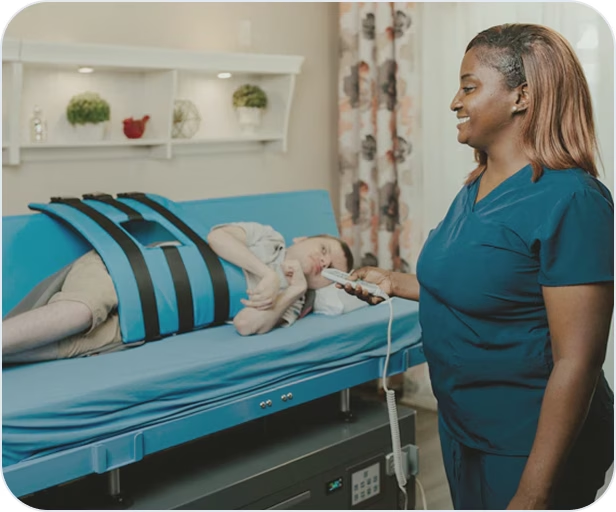
SideLyer is designed for patients who cannot reposition on their own or who require consistent support to stay
safely positioned and relieve pressure throughout the day. Many care strategies rely on regular repositioning
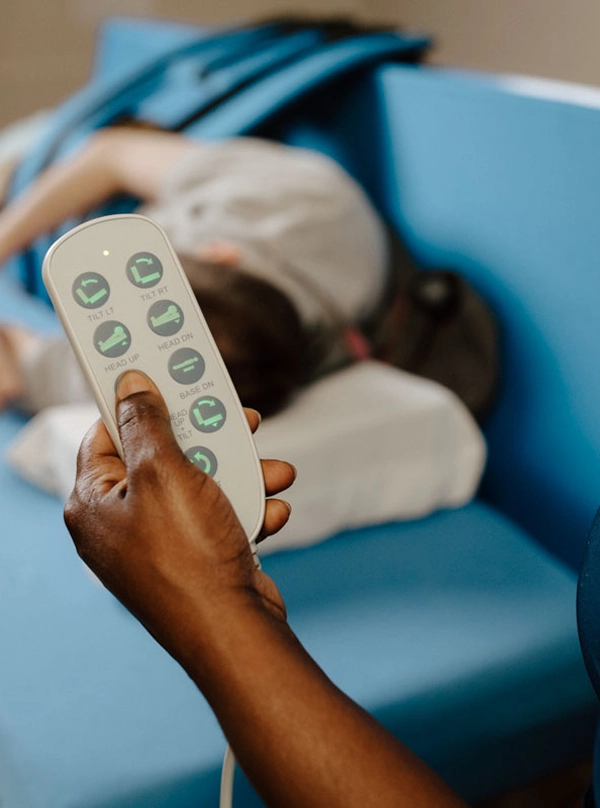
to prevent pressure-related injuries and support proper circulation. The motorized controls built into
SideLyer allow caregivers to make these adjustments easily, ensuring that patients remain comfortable while
their skin is protected and daily routines are completed effectively.
How do pressure ulcers/pressure sores form in immobile patients?
+
Pressure ulcers typically develop over time when several risk factors are present. A lack of movement,
persistent moisture, friction from bedding or clothing, and fragile skin all increase the likelihood of
injury. Initially, these sores may appear as small red or tender spots, but continued pressure on the area can
cause them to progress into more serious wounds. Families and medical professionals work together to ensure
regular repositioning and the use of supportive surfaces to help prevent the development of bed sores.
How does SideLyer support care when dead tissue is present?
+
SideLyer facilitates optimal positioning of patients, enabling clinical staff to treat pressure ulcers without
frequent manual repositioning. This supports a safer approach to wound management, allowing caregivers to
monitor healing effectively, remove dead tissue when necessary, and reduce the risk of further tissue damage
during routine care.
How does SideLyer help prevent pressure ulcers in high-risk patients?
+
SideLyer supports the prevention of pressure ulcers by ensuring consistent repositioning, which reduces
prolonged pressure and creates an environment that protects the skin. The system helps address contributing
risk factors such as immobility, nutritional deficiencies, and decreased sensation. In patients with spinal
cord injuries, this approach can greatly decrease the probability of developing pressure ulcers and reduces
the likelihood that any minor injuries will progress into severe or decubitus ulcers.
How does SideLyer support pressure reduction for at-risk patients?
+
SideLyer consistently reduces external pressure on vulnerable skin, which supports blood flow, helps manage
discomfort, and limits the risk of tissue damage. Working alongside pressure-relieving support surfaces, it
contributes to the prevention of chronic pressure ulcers, assists in reducing infection risks, and provides an
important aid in the management of persistent wounds.
How does SideLyer support daily skin care routines?
+
SideLyer enables healthcare providers to maintain clean and dry skin for individuals at risk of pressure
injuries while simplifying the process of monitoring changes in skin tone or condition. By combining
consistent positioning with careful observation, it supports care plans that utilize moisture barrier creams
and other wound prevention measures, ensuring optimal skin care and reducing the risk of complications.
Can SideLyer help manage long-term wound risks?
+
Yes, using SideLyer allows caregivers to maintain effective pressure reduction and consistent positioning for
individuals at risk. These measures are critical in preventing pressure injuries from advancing into chronic
ulcers while supporting better overall healing outcomes for chronic wounds.
How did the SideLyer originate?
+
The SideLyer began more than ten years ago when a dedicated night-shift nurse at Quest Inc. observed that
residents who could not adjust their own positions were frequently developing preventable pressure injuries.
At the same time, caregivers were sustaining injuries due to repeated manual lifting. To solve this problem,
she and her carpenter husband crafted the first SideLyer from wood, creating a range of sizes to fit the
varying needs of residents.
These early handcrafted prototypes included personal touches such as colorful designs, stickers, trays, and
storage compartments. Over the years, the idea was refined and expanded into a patented motorized system
that meets rigorous industry standards. The final product improved safety, enhanced resident comfort, and
encouraged engagement in daily activities.
What is Quest Inc., and how is it related to SideLyer?
+
Quest Inc. is a longstanding nonprofit organization with a history of more than sixty years in offering
homes, attentive care, and comprehensive support for people with developmental disabilities. The SideLyer
was created within its residential care program to address the frequent occurrence of pressure ulcers,
enhance residents’ well-being, and minimize the physical strain on caregivers. Today, Quest Inc. continues
to collaborate closely with the SideLyer team, providing extensive frontline knowledge that guides the
device’s design, safety measures, and overall clinical purpose.
Watch our story:
What impact has SideLyer had on individuals in Texas and their families?
+
Individuals in Texas who rely on structured repositioning support report better overall comfort, fewer
pressure injuries, and increased opportunities for social engagement. Maintaining comfort and proper
positioning throughout the day allows individuals to participate more fully in therapeutic and recreational
activities.
Families often share relief knowing their loved ones are positioned safely and experience less discomfort.
A Quest Inc. parent remarked, “Most of her pressure is not where she can have a skin breakdown. It takes the
pressure off the body.” Stories like this illustrate the peace of mind that consistent care provides to
families.
Others observed that wounds expected to take “months and months” to heal recovered much faster due to
diligent and consistent repositioning. The positive outcomes underscore the importance of careful monitoring
and proactive support for individuals with limited mobility.