Bed Sore Treatment & Prevention in Chicago

Call Now
Explore Features of the SideLyer

Protect Your Loved Ones in Chicago from Bed Sores with SideLyer

Rest is supposed to heal you. For someone who cannot shift their own weight, lying still does the opposite. Steady pressure on one small spot, the hip, the tailbone, a heel, simply never eases, and because the damage usually starts in the tissue beneath the skin, the surface can look perfectly fine while a wound quietly forms underneath.

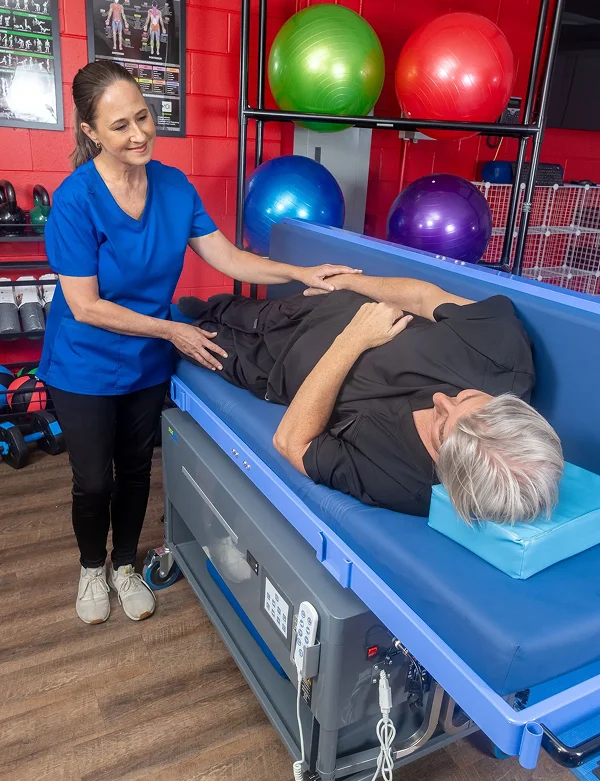
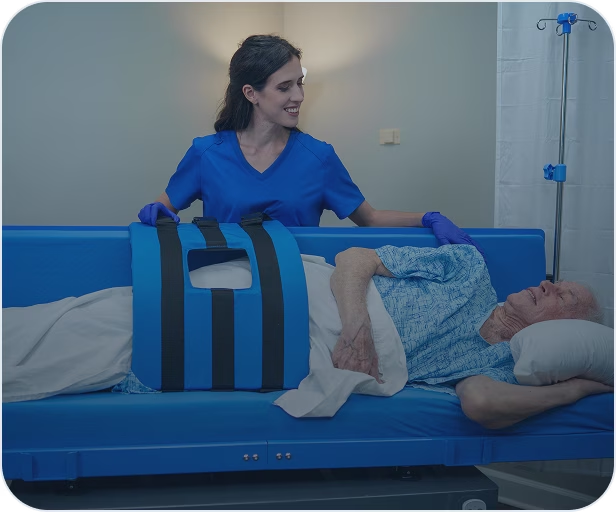
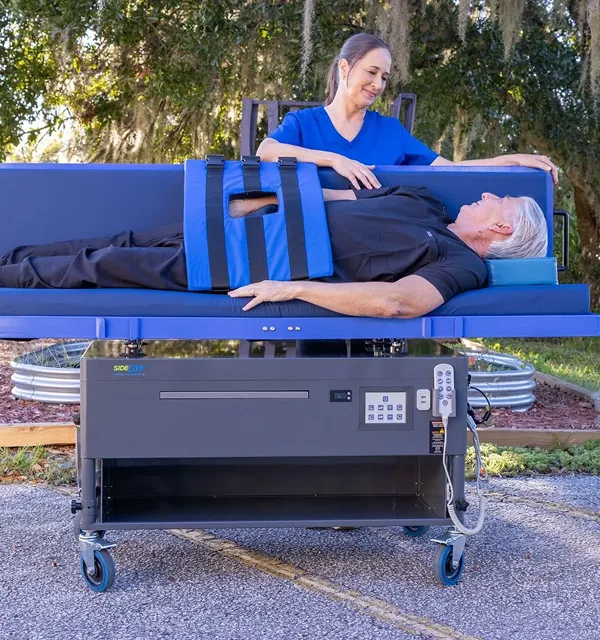
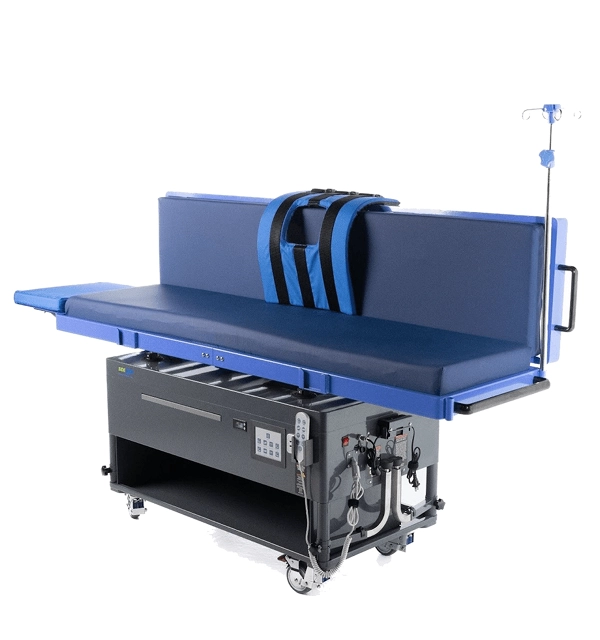
‍SideLyer was built to interrupt that process. A motor handles the movement, so the caregiver can change the body's angle right when it is due. That brings blood back to the tissue that was bearing the load, shields the skin across the hips and lower back, and lifts the person upright into a seated position where they can be part of whatever is happening in the room.

Contact Us

10× Fewer Bed Sores in Immobile Patients

The cause is simple, and it does not forgive. Constant weight on a bony point presses the blood vessels feeding the tissue above it, and tissue starved of blood starts to break down. SideLyer counters this by holding the body at angles that move the load elsewhere and let circulation return before harm sets in. People using the system get bed sores up to ten times less often, and every sore that never happens is a wound nobody has to heal.
Contact Us
Explore Features of the SideLyer

How it Works

Explore Features of the SideLyer

Advantages of SideLyer

Ask why 93% of healthcare providers recommend SideLyer for people at risk of bed sores, and the reasons are anything but vague:

Precise angles that lift comfort, feed circulation, and guard the skin
Repositioning at reliable intervals, the single thing prevention cannot skip
A raised position that puts the person eye to eye with the people caring for them
Motorized adjustment at the tap of a button, so nobody has to lift
Surfaces that wipe down quickly and hold up to daily use
A complete range of angles for therapy, activities, and the plain rhythm of a day
A design that keeps the person at the center of family life, not off to the side
Contact Us

Who Can Benefit From SideLyer in Chicago?

Someone in your family here in Chicago may be a good fit for SideLyer if they:

Are recovering at home after surgery or an injury
Are living with lasting mobility limits like ALS, MS, or a spinal cord injury
 Are at risk of bed sores or skin breakdown

Home health aides and family caregivers looking for a safer way to help their patients will get a lot out of it too. Across Cook County, families have long taken care of aging parents at home, in the brick bungalows of the Southwest Side, the two-flats of Logan Square and Pilsen, and the older houses out in Oak Park and Berwyn, and that dedication drops the whole task of repositioning onto sons, daughters, and spouses who were never trained for it.

Schedule a Demo

who-can-benefit-from-sidelyer
Explore Features of the SideLyer

Why Families in Chicago Choose SideLyer to Prevent Bed Sores

Families caring for someone at home want three things: a relative who is safe, comfortable, and treated with dignity. Repositioning drives all three, and what limits it is physical. Turning a grown adult by hand every two hours, overnight as much as midday, is more than most households can keep up for long.

With SideLyer, caregivers can:

Reposition with a motorized control rather than lifting
Give their loved one the same pressure ulcer prevention standard hospitals rely on
Support skin health and circulation through precise positioning
Hold to a repositioning schedule without lining up help every time
Spare their own body and lower their risk of injury
Manage on their own what would normally take two people
Keep their family member involved and connected all day

In a Chicago home where the main caregiver is also holding down a shift, being able to finish a full turn by yourself in under a minute is often the difference between home care that lasts and home care that folds after a few months.

Contact Us
Our Mission

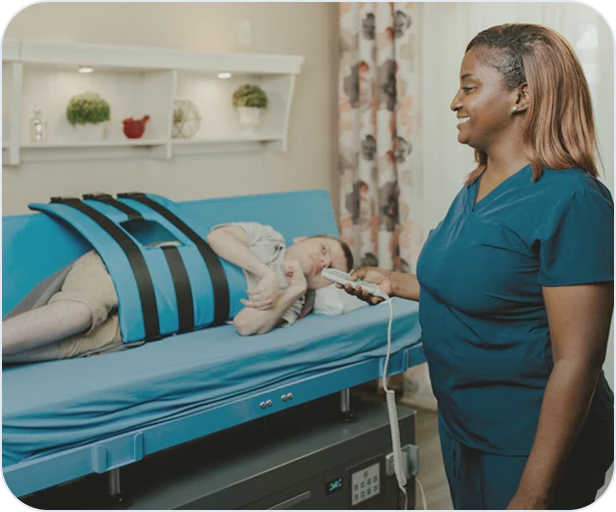
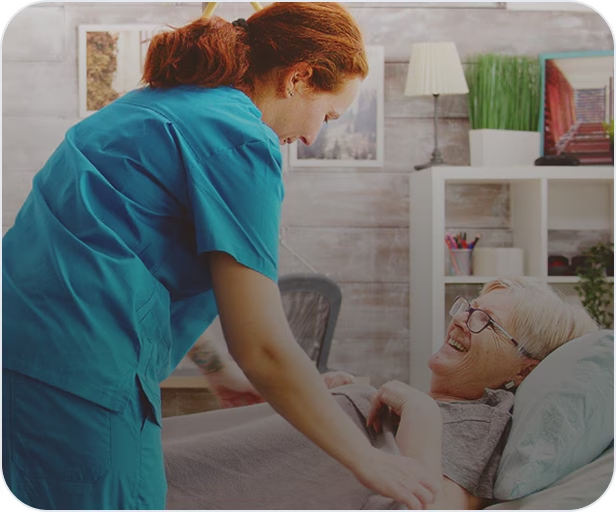
Our mission is to bring down the rate of pressure ulcers among people with limited mobility while protecting the health and safety of the caregivers looking after them. We partner with families and healthcare facilities alike to head off pressure injuries that never had to happen and to cut down the injuries that come from repositioning by hand. Motorized repositioning technology lifts the strain off caregivers, makes everyday care run smoother, and preserves the dignity and independence of people who cannot turn themselves in.

Schedule A Demo

Frequently Asked Questions

What does getting started look like? +

The first step is an easy one: a virtual demo led by our team while you watch from your own home in Chicago. We take the system through every position, and you ask about anything on your mind, including whether it will work in the room you are picturing for it. Then you get a 90-day free trial, which means you judge the system by living with it in your own routine, not by a polished sales demo.

Is any of the cost covered by insurance? +
It frequently is, but eligibility has the final say. SideLyer lists at $11,000 with insurance coverage and $6,900 without. What a family ends up paying really hinges on their particular plan, so our team sits down with you, goes through the possibilities, and figures out what the cost will genuinely be.
Do you offer rentals for Chicago families? +
We do. Renting comes out to $550 a month on a 13-month minimum term. When nobody knows how long the recovery is going to run, or a family would just as soon not buy, renting usually turns out to be the wiser way to go.
Which care situations call for SideLyer? +
Any time a person cannot reposition on their own, or leans on regular help to stay in a safe position. Repositioning is written into most care plans for a very good reason: it keeps steady pressure off the areas that are quickest to break down and keeps blood flowing to them. Hand a caregiver a motorized control and each change happens right on time, and that timing is the very first thing to slip when every single turn has to be muscled by hand.
What causes pressure ulcers in people who are bedridden? +
Steady pressure that does its damage from the inside out. When the body's weight settles on a bony point, it pinches the tissue caught between the bone and the skin, and the little vessels running through it clamp shut. The deep tissue, now without oxygen, fails first, so all you might see up top is a faint blush of red while a real wound is taking shape underneath. Add moisture on the skin, the friction of sliding down in bed, skin worn thin and fragile, or a loss of feeling, and it all happens faster. A small injury becomes a big one whenever the pressure behind it is never lifted.
How is an open bed sore managed? +
You protect the spot and let the body get on with healing. A clinician calls the shots on the wound care, the area is kept clean and dry to the right degree, and the caregiver keeps any weight off both the wound and the good skin ringing it. From here on, repositioning is not just prevention, it is part of the treatment, because a wound that stays pinned under pressure is never going to close.
Can a bed sore be fatal? +
Sadly, yes. A serious pressure injury pushes down past the skin into the tissue below, where the tissue can die, healing almost quits, and the risk of infection and other complications keeps climbing. Wounds that deep need clinical care, sometimes surgery to clear away dead tissue along with monitoring that goes on for a long while. Nearly all of them could have been stopped with steady pressure relief, and that is the whole reason prevention is where the energy belongs.
What does pressure relief do for the skin? +
It gets the blood moving again, and blood is what lets skin do its real job, standing guard against bacteria. There is a bonus in it too: every turn puts skin that normally stays covered right in front of the caregiver, so that first flush of redness gets caught while it can still calm down on its own. Steady positioning support keeps fragile skin whole and gives the body the space it needs to bounce back.
What should happen if dead tissue forms in a wound? +

Dead tissue is the body's way of saying the area sat too long under pressure with too little blood to keep it alive. Now the job is to protect the skin around the wound, help it recover, and set the person up so the wound never takes any weight. The other tender areas have to stay pressure-free at the same time, or a second wound opens up while the first is still trying to heal. SideLyer lets caregivers turn a person safely and right on schedule, which makes a bed sore far less likely to get its start.

Who invented the SideLyer? +

It goes back to a nurse working nights at Quest Inc. over ten years ago. Residents who could not turn on their own kept getting pressure injuries that should never have happened, and the staff hoisting them kept getting hurt in the bargain. Her husband was a carpenter, so the two of them built that first SideLyer out of wood, in a handful of sizes so every resident had one that actually fit. The wooden originals were brightened up with colors and stickers and kitted out with trays and storage, and before long residents and staff alike counted on them. The patented motorized system we have today grew straight out of that first wooden one.

How is Quest Inc. connected to SideLyer? +

Quest Inc. is a nonprofit that has given people with developmental disabilities homes, care, and support for more than 60 years. SideLyer came to life inside Quest's residential care program as a way to fight pressure ulcers, to make people more comfortable and their days better, and to spare caregivers from injury. Quest Inc. is still a core partner, and the organization's decades of on-the-ground experience keep guiding how the system is designed, how it keeps people safe, and what it is really for.

Watch our story:

What difference has SideLyer made for families in Chicago? +

All over Chicago and Cook County, families come back to us with the same themes: more comfort, fewer pressure injuries, and a relative who is more present with the people around them. The word we hear again and again is relief, the sense that their family member is properly supported the whole day long, not only in the odd moments when a helper happens to be free.

As one Quest Inc. parent shared, "Most of her pressure is not where she can have a skin breakdown. It takes the pressure off the body."

More than a few families have also told us about wounds that were supposed to take months to close, finishing up in a lot less time once the repositioning became something they could count on.