
Bed Sore Treatment & Prevention in Harrisburg
Call Now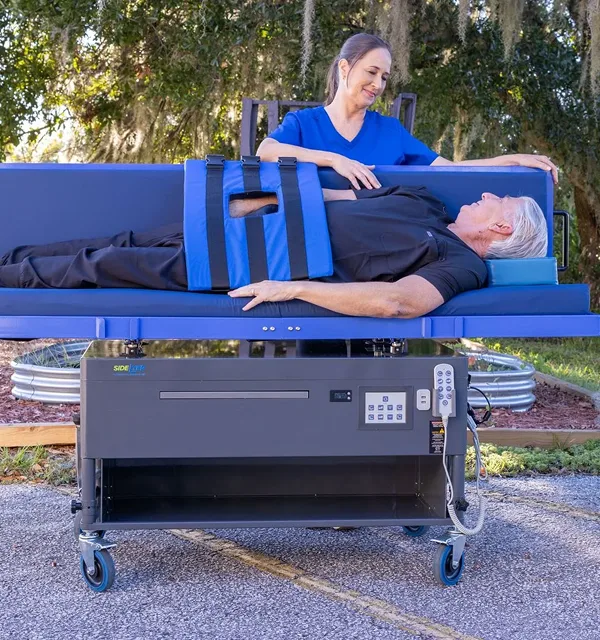
Protect Your Loved Ones in Harrisburg from Bed Sores with SideLyer
For a family caring for someone who cannot move without help, pressure ulcer prevention is a task that never pauses. The pressure that causes the injury is doing its work whether or not anyone is watching, and when the person cannot say that something hurts, the family has no early signal to act on.
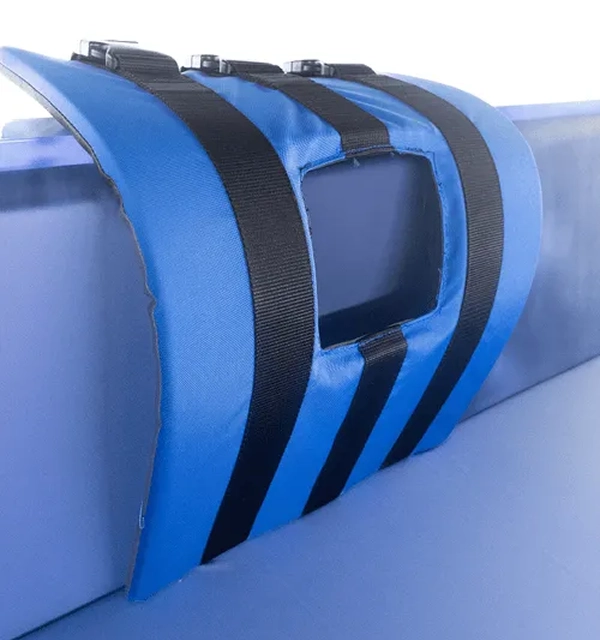
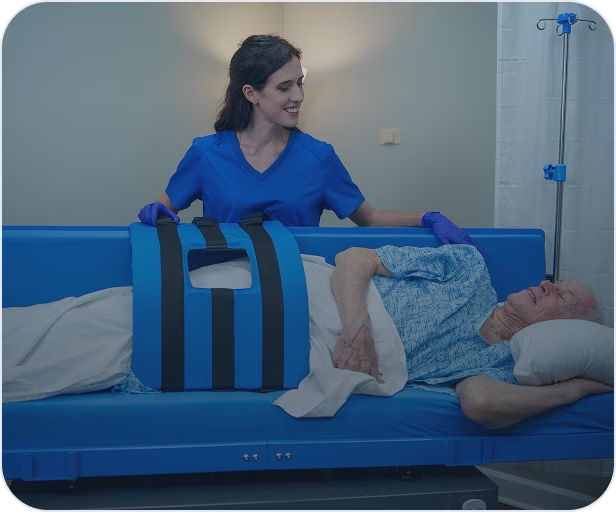
SideLyer addresses this by making frequent repositioning realistic. Motorized adjustment changes the body's angle at the push of a button, which brings circulation back to compressed tissue, keeps skin intact over the areas most at risk, and raises the person into a position where they can engage with the room instead of the ceiling.
10× Fewer Bed Sores in Immobile Patients
Prolonged pressure on one part of the body restricts the blood supply that tissue depends on, and once circulation is cut off long enough, breakdown follows. SideLyer supports the body at angles that move weight off vulnerable areas and let blood flow return to them. Patients using the system develop bed sores up to ten times less frequently, avoiding both the wound and the extended recovery that typically accompanies one.
How it Works
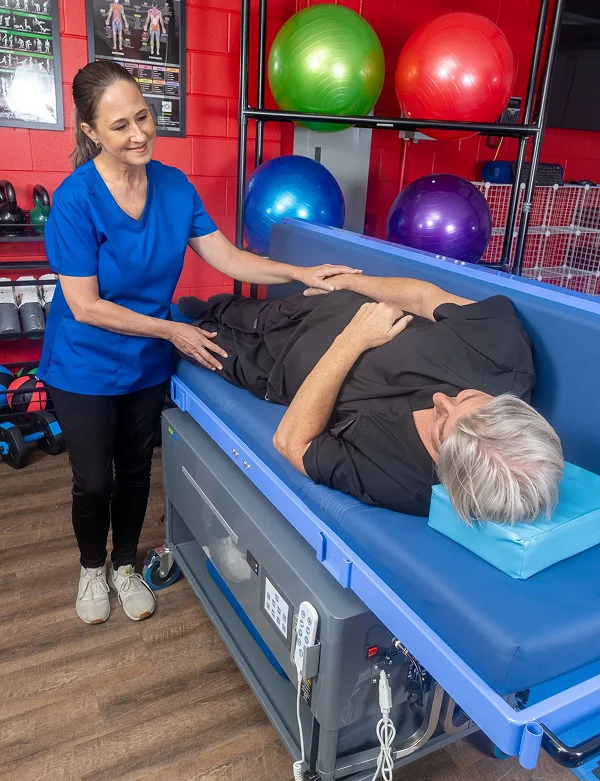
Advantages of SideLyer
There is a reason 93% of healthcare providers recommend SideLyer for patients vulnerable to bed sores. Its benefits include:
Who Can Benefit From SideLyer in Harrisburg?
Your loved one in Harrisburg may benefit from SideLyer if they:
Caregivers, family members, and home health providers looking for safer and more workable ways to assist will find SideLyer useful too. Families in the counties surrounding Harrisburg often live a considerable distance from the nearest wound care clinic, which makes preventing an injury at home meaningfully more valuable than treating one after the fact.
Schedule a Demo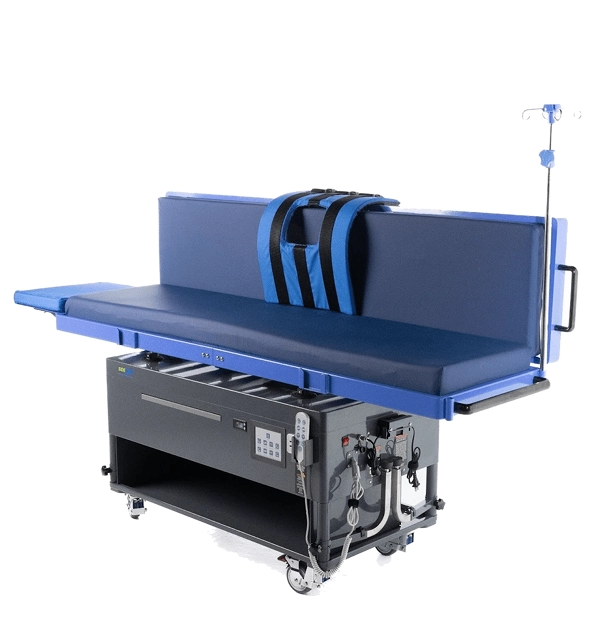

Why Families in Harrisburg Choose SideLyer to Prevent Bed Sores
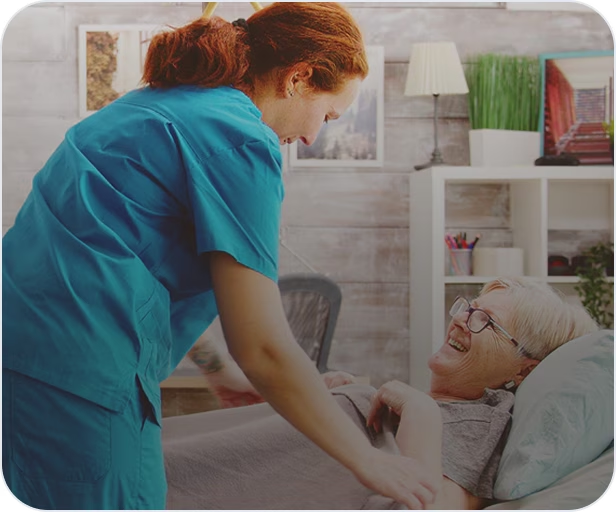
When a family is caring for someone immobile, they want confidence that the person is safe, comfortable, and treated with respect. Repositioning is central to all three, and doing it well by hand, every two hours, without interruption, asks more of a household than most can sustain.
Caregivers using SideLyer can:
Where the nearest available help may be twenty minutes away on a rural road, the ability for one person to complete a turn without waiting for another is not a convenience but a requirement.
Contact Us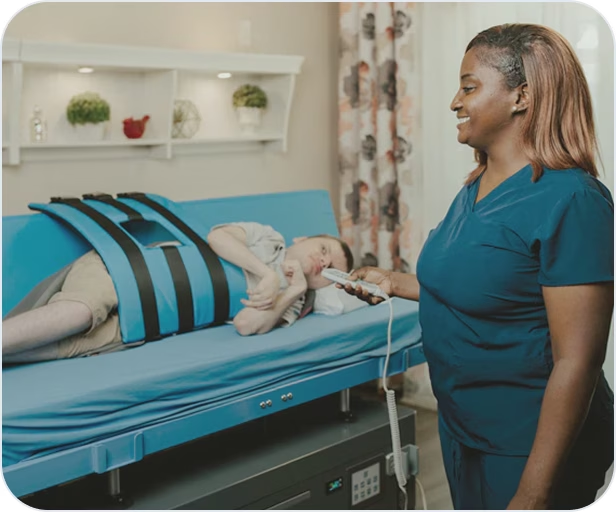
Our Mission
Our mission centers on reducing pressure ulcers in people with limited mobility while safeguarding the health and safety of caregivers. We help family members and healthcare facilities prevent avoidable pressure injuries and lower the risk of injury caused by manual repositioning. Through motorized repositioning technology, we ease caregiver strain, improve the efficiency of daily care, and support dignity and independence for individuals unable to reposition themselves.
Schedule A Demo