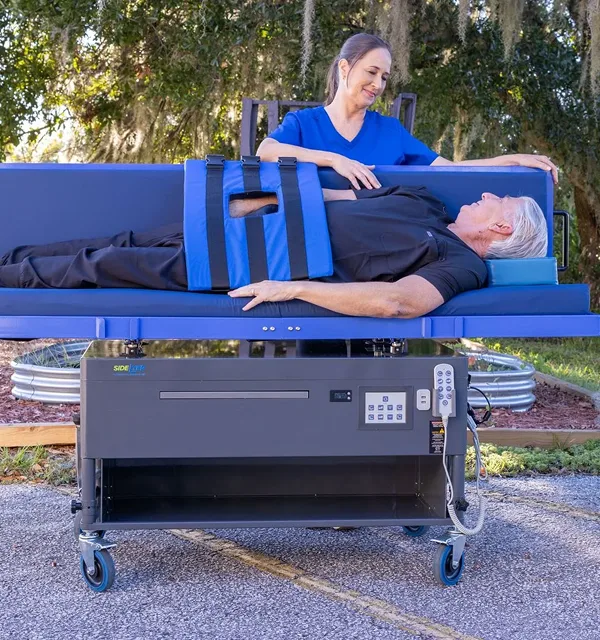
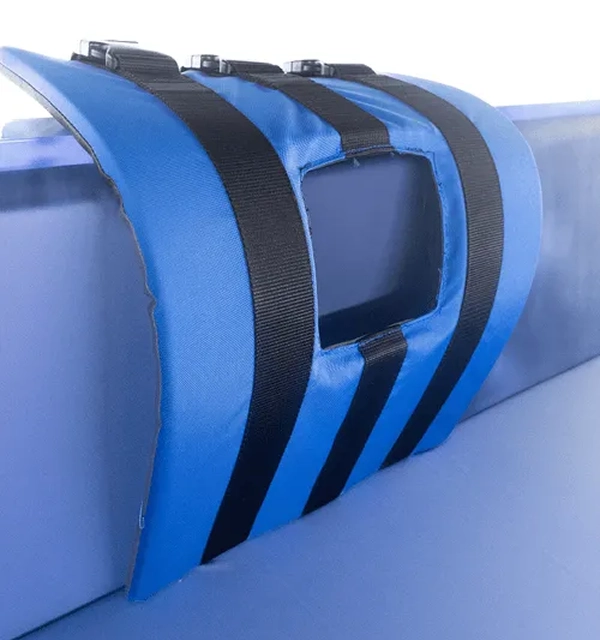
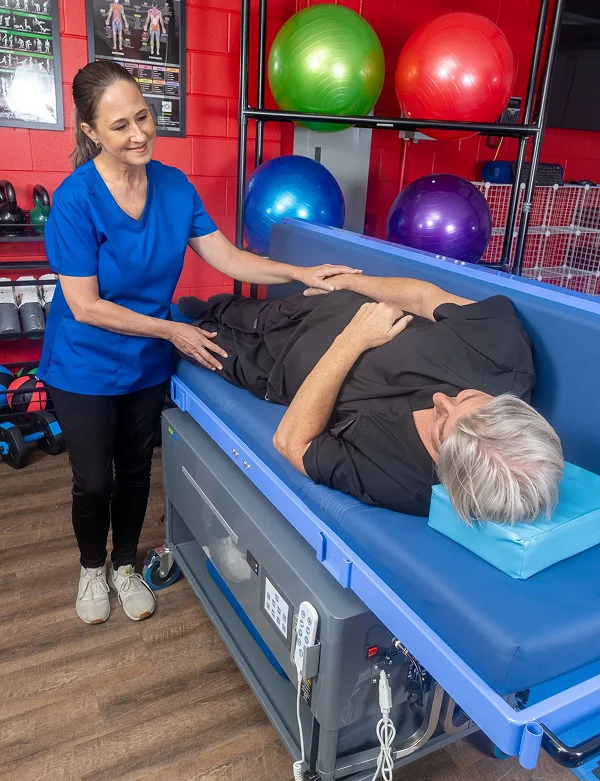
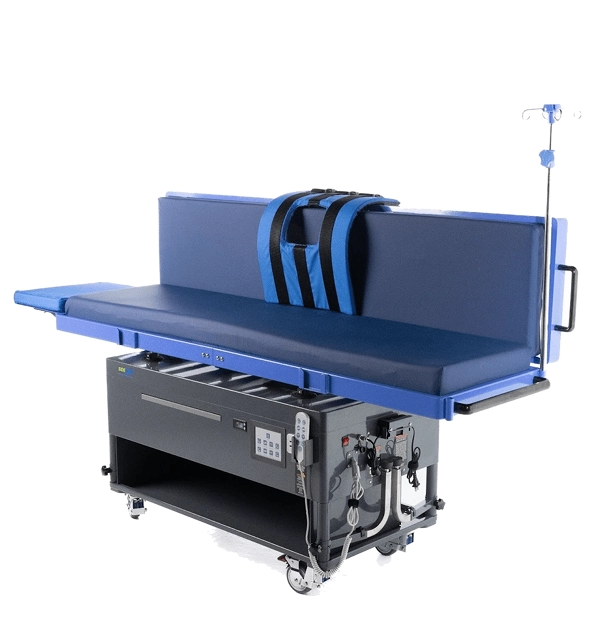
How do we get started with SideLyer?
+
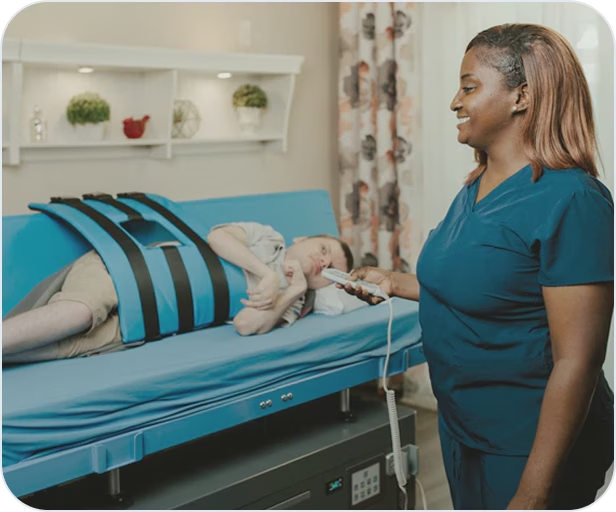
Reading families begin with a virtual demo conducted from home by our team. You will see the system move through each position and can raise whatever questions apply to your circumstances, including how it would fit the room you plan to use. A 90-day free trial follows, which lets you test the system in your own routine rather than deciding based on a demonstration alone.
Is SideLyer covered by insurance?
+
Often, depending on eligibility. Retail pricing is $11,000 with insurance coverage and $6,900 without. Because coverage decisions turn on individual circumstances, our team reviews the available options with families and helps determine what they would actually pay.
Can families in Reading rent SideLyer instead of purchasing it?
+
Yes. The rental fee is $550 each month with a minimum term of 13 months. Families managing a recovery of uncertain length, or those who would rather not purchase outright, generally find renting the more sensible arrangement.
When should we use SideLyer in a care plan?
+
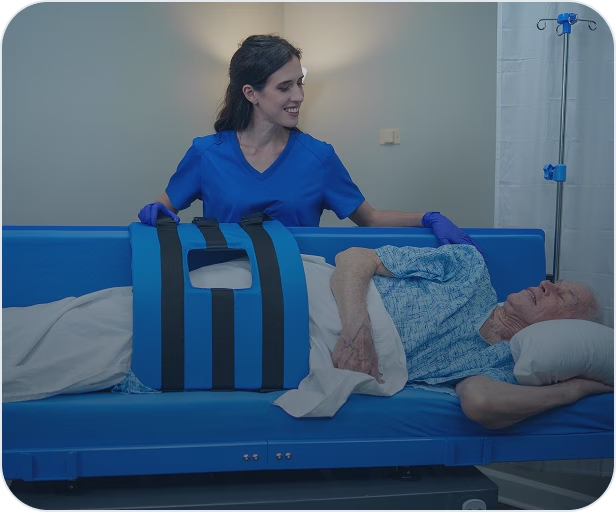
It applies whenever someone cannot change position on their own or needs steady help maintaining a safe one. Repositioning belongs in most care routines because it keeps sustained pressure off vulnerable areas and supports circulation to them. The motorized controls let a caregiver make those adjustments whenever the plan calls for them, which is where schedules usually break down when the work is done by hand.
How do pressure ulcers/pressure sores form in immobile patients?
+
Most begin below the surface rather than on it. Body weight resting on a bony area compresses the tissue between bone and skin, and the blood vessels running through that tissue close under the load. Deprived of oxygen, the deeper tissue starts to fail first, which is why an area can look only slightly reddened while a wound is already forming underneath. Moisture, friction from sliding in bed, fragile skin, and reduced sensation all shorten the time this takes. Small injuries progress into serious ones when the pressure causing them is never lifted.
What happens if an open sore develops on the skin?
+
The focus becomes protecting the site while the body does the work of healing. That means wound care directed by a clinician, keeping the area clean and appropriately dry, and confirming that neither the wound nor the healthy skin around it is bearing weight. Repositioning is part of the treatment from that point forward, because a wound under sustained pressure does not have the conditions it needs to close.
Can pressure ulcers become life-threatening if they are not treated?
+
They can. Severe injuries extend past the skin into deeper tissue, where dead tissue may form, healing slows markedly, and the risk of complications including infection increases. Managing a wound at that stage requires clinical care, at times including removal of necrotic tissue along with sustained monitoring. Almost all of it is preventable through consistent pressure relief, which is the argument for investing effort at the prevention stage rather than the treatment stage.
How does pressure relief help prevent infection and skin damage?
+
Lifting pressure allows blood to return to tissue that has gone without it, and that returning circulation is what lets skin function as a barrier against bacteria. Each position change also gives the caregiver a direct look at skin that stays covered the rest of the time, which is how early redness gets noticed while it can still resolve without intervention. Steady positioning support protects fragile skin and gives the body the opportunity to recover.
What happens if dead tissue develops in a pressure wound?
+
Its presence indicates the area spent too long under pressure with too little blood supply to sustain the tissue. Care concentrates on protecting the skin around the wound, supporting its recovery, and repositioning so the affected site carries no load. Keeping other vulnerable areas free of pressure during that period prevents new wounds from opening while the first one heals. SideLyer helps caregivers reposition safely and consistently, which lowers the chance of bed sores developing at all.
How did the SideLyer originate?
+
The system began more than ten years ago when a night-shift nurse at Quest Inc. saw a problem affecting residents and staff alike. People who could not reposition themselves were developing preventable pressure injuries, and the caregivers lifting them were being hurt. Working with her husband, a carpenter, she built the first SideLyer from wood in several sizes so it fit each resident correctly. The early prototypes were personalized with colors, stickers, trays, and storage, and they became a trusted part of daily care. That idea eventually became the patented motorized system available now.
What is Quest Inc., and how is it related to SideLyer?
+
Quest Inc. is a nonprofit with more than 60 years of experience providing homes, care, and support for individuals with developmental disabilities. SideLyer was created inside its residential care program to address pressure ulcers, improve comfort and quality of life, and reduce caregiver injuries. Quest Inc. remains a key partner, and decades of hands-on experience continue to shape the system's design, safety features, and clinical purpose.
Watch our story:
What impact has SideLyer had on individuals in Reading and their families?
+
Families across Reading and Berks County have reported better comfort, fewer pressure-related injuries, and more engagement from the person in their care. A common thread is relief at knowing their relative is properly supported through the whole day rather than only when someone is free to help.
As one Quest Inc. parent shared, "Most of her pressure is not where she can have a skin breakdown. It takes the pressure off the body."
Several families have also described wounds they were told would take months to heal, improving in considerably less time once repositioning became consistent.