How do we get started with SideLyer?
+
Schedule a virtual demo . Our specialists walk Harrisburg families and facility teams through the system position by position, answer questions about how it fits a pressure injury prevention program, and address the practical matters an administrator will want settled, from room requirements to staff training. The demonstration is followed by an optional 90-day free trial, which places SideLyer in your daily care routine long enough to document its effect on patient comfort, engagement, and safety before any purchase is made.
Is SideLyer covered by insurance?
+
It can be subject to the policy and the patient’s eligibility. The retail price is $11,000 when insurance coverage applies and $6,900 for an independent purchase without coverage. Because the answer differs from one policy to the next, our team examines each family’s options, explains what the coverage includes, and works out the expected final cost in advance, so that no one is surprised by the figure.
Can our health facility in Harrisburg rent SideLyer instead of purchasing it?
+
Yes. For individuals and families in Harrisburg who would rather not commit to a purchase, SideLyer is available on a rental basis at $550 per month with a minimum term of 13 months. Every feature of the system is included. Facilities and families evaluating long-term repositioning support often find that renting preserves budget flexibility while the benefits are being measured.
When should we use SideLyer in a care plan?
+
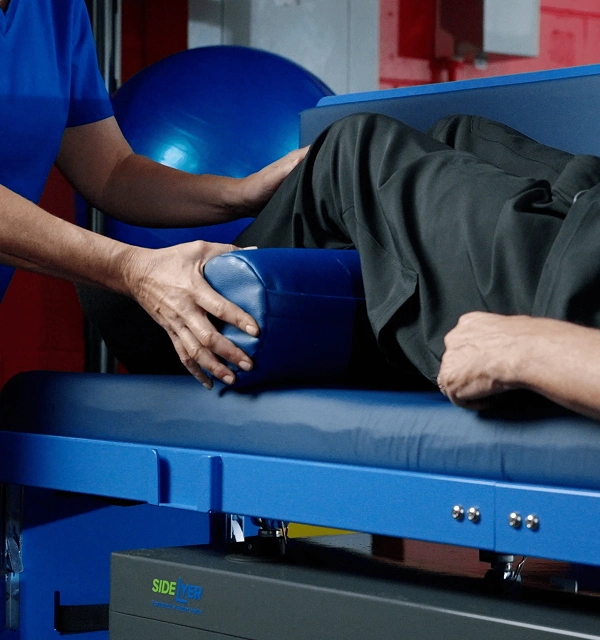
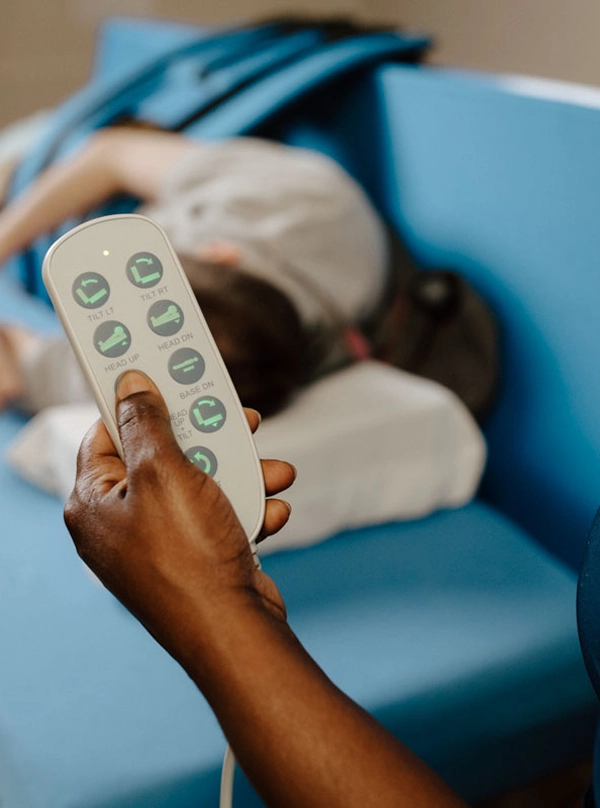
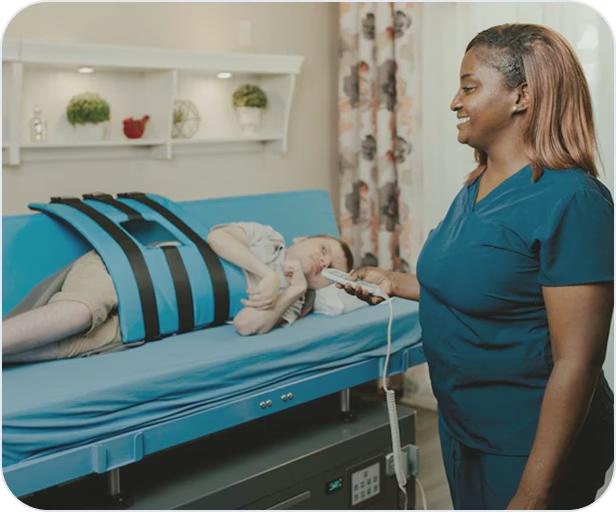
Include it for any patient who cannot reposition independently or who needs continuous help to hold a pressure-relieving position. Those positions are what protect the skin, sustain blood flow, and keep pressure-related injuries from forming, and a protocol is only as good as its execution. The motorized system makes each adjustment quick and physically undemanding for the caregiver, which is how consistent adherence is achieved and documented shift after shift.
How do pressure ulcers/pressure sores form in immobile patients?
+
They form gradually, as continuous pressure, friction, and moisture wear down the skin and the tissue beneath it. The patients most at risk are those with limited mobility, fragile skin, or underlying health conditions. Early warning may be limited to mild redness or irritation, but a wound can become severe if the pressure is not relieved. Regular repositioning, supported by specialized surfaces, remains the basis of prevention.
How does SideLyer support care when dead tissue is present?
+
Wound care involving necrotic tissue requires a patient who stays still in the correct position, and SideLyer provides exactly that while the intervention is carried out. Caregivers are spared repeated lifting and repositioning, debridement and wound monitoring proceed more safely, and the motorized support improves efficiency and patient safety during procedures that would otherwise strain both.
How does SideLyer help prevent pressure ulcers in high-risk patients?
+
Through controlled, systematic repositioning that prevents prolonged pressure from settling on one area and thereby reduces the risk of skin breakdown. The benefit is greatest for patients whose vulnerability is heightened by limited mobility, poor circulation, or nutritional deficiency. For patients with spinal cord injuries, regular use lowers the chance of a new pressure ulcer and keeps existing damage from advancing, which protects skin resilience and overall well-being over the long term.
How does SideLyer support pressure reduction for at-risk patients?
+
The system relieves pressure continuously and dependably, and in doing so protects fragile skin, improves circulation, and reduces the discomfort that comes with immobility. Combined with appropriate support surfaces, SideLyer is an effective instrument for preventing chronic pressure injuries, holding down the risk of infection, and helping caregivers manage long-standing wounds toward healing.
How does SideLyer support daily skin care routines?
+
Skin that is kept clean, dry, and healthy is far less likely to break down, and controlled, regular repositioning makes that standard easier to maintain for susceptible patients. Each repositioning also exposes skin that is otherwise covered, so minor changes are seen early enough to act on. Within a care plan that includes moisture barrier protection, SideLyer provides reliable support for preventing pressure ulcers and preserving skin integrity.
Can SideLyer help manage long-term wound risks?
+
Yes. For patients who are immobile or have limited mobility, SideLyer maintains correct positioning and reduces sustained pressure, which lowers the risk of chronic pressure ulcers and creates conditions in which long-term wounds can heal. Comfort improves, and recovery proceeds more efficiently.
How did the SideLyer originate?
+
The system has its roots in a night shift at Quest Inc. more than ten years ago. A nurse there recognized that residents who could not move on their own were developing pressure injuries, and that the caregivers lifting them by hand were being hurt in the process. With her husband, a skilled carpenter, she built the first SideLyer out of wood and produced it in several sizes so that each resident had one suited to them.
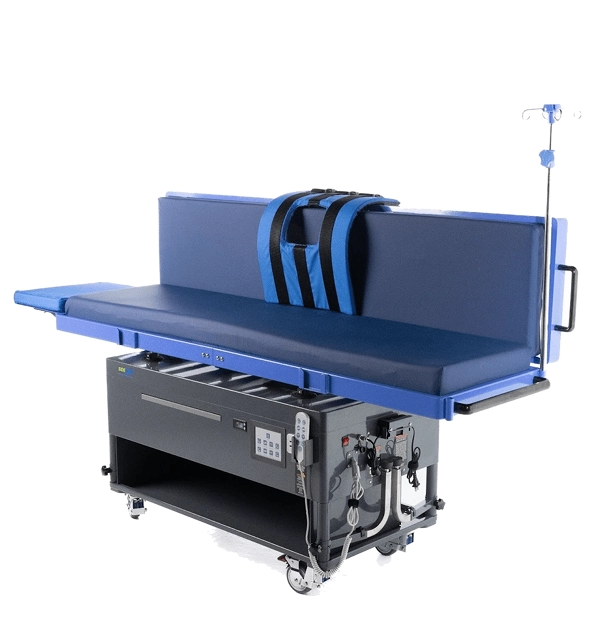
Those first devices carried personal touches, including bright paint, playful stickers, trays for convenience, and built-in storage, which made them useful and welcome in equal measure. The concept evolved into the patented, motorized SideLyer system used today, one that meets industry standards, improves safety and comfort for patients, and reduces the physical demands on caregiving staff.
What is Quest Inc., and how is it related to SideLyer?
+
Quest Inc. is a provider of safe housing, individualized care, and broad-based support for people with developmental disabilities, with a record extending over more than six decades. The SideLyer was developed within its residential care program as a practical means of protecting residents from pressure ulcers, improving comfort, and raising quality of life, while also lowering the risk of injury to caregivers during repositioning. It became an established part of daily care, and Quest Inc.’s extensive hands-on experience continues to inform the design, clinical safety measures, and applications of SideLyer.
Watch our story:
What impact has SideLyer had on individuals in Harrisburg and their families?
+
In Harrisburg, care recipients who are repositioned regularly and precisely are more comfortable, develop fewer pressure wounds, and take a larger part in social and daily activities, outcomes that serve both physical health and overall satisfaction with life. Families frequently speak of the reassurance of knowing a loved one is positioned safely and comfortably at every hour. One parent shared, “Most of her pressure is not where she can have a skin breakdown. It takes the pressure off the body.” Comments of that kind reflect how effective and how reassuring careful, compassionate care can be.
Caregivers report a related pattern: wounds that were expected to heal slowly often recover more quickly once consistent, careful repositioning is in place, a result that underscores the value of attentive routines for people with limited mobility.